

Last February I watched Daisy circle her bed three times, lie down, and then get right back up. She's nine, a terrier mix, and she used to fall asleep anywhere, but that winter she started shifting around at night and getting stiff in the mornings. I knew she needed something better. What I didn't know was how much difference the right bed makes once you stop guessing and start measuring. This guide is the five steps I used when I replaced every bed in the house, in order, and the Bedsure orthopedic large bed is where I landed.
The mistake most people make, and I made it too the first time, is buying a bed the way you buy a throw pillow. You pick a color for the living room, you eyeball the size, and you never once measure the dog lying flat. A senior dog needs different things than a puppy: support where her hips and elbows meet the floor, a surface that doesn't hold the cold, and edges she can rest her head on without scrunching her neck. Work through these five steps in order and you'll end up with a bed that holds up for years instead of a pillow that goes flat in a month. And do it before the old bed goes in the trash, because you want to compare, not just replace.
The bed that finally got Daisy to stay down
After a stack of beds that went flat or wouldn't wash, the Bedsure orthopedic large bed is the one she settles into by 9pm and stays in until morning. Measure her flat, nose to tail plus a few inches, and start here.
Amazon Check Today's Price on Amazon →Step 1: Measure the dog stretched out, not curled up
The single most common sizing mistake is measuring the dog in the position you like looking at. Tucker curls into a tight ball at the foot of the bed, and if I sized for that shape he'd be cramped the moment he stretched a leg out at 3am. Daisy sleeps stretched on her side with her legs out, which is a much longer shape than she looks standing up. So measure her from the tip of her nose to the base of her tail while she's lying flat, then add six to eight inches for room to move. That number, not her weight, is what should drive the size you buy.
Write that number down before you open any product page. Daisy is a small dog, 25 pounds, but stretched out she measures about 30 inches nose to tail, which puts her in a much larger bed than her weight would suggest. That's exactly why the Bedsure large bed fit her better than the medium beds we already owned, even though every chart online said a 25-pound dog belongs in a medium. I nearly ordered the medium out of habit. Measuring first is what kept me from repeating the same mistake.
The rule I use now, and it has never let me down: when in doubt, go up a size. A senior dog that can't stretch out will get up and sleep on the floor next to the bed, and I've watched Daisy do exactly that more times than I want to admit. The extra few inches of a larger bed cost nothing in the long run, because a bed that gets used every night is worth ten that get ignored in the corner. Measure her flat, add the six to eight inches, and buy to that number.
Step 2: Check the foam, not the label
Every bed on the market says orthopedic. The word stopped meaning much years ago, so I ignore it and check what's actually inside. A solid block of high-density foam holds its shape for years, while a bed stuffed with shredded filler goes flat right where the hips and elbows press down, usually within a few months. The Bedsure large bed has a dense foam base, and that base is the whole reason it still looks and feels the same a year and a half later.
The test I use is the palm test. Press your palm into the middle of the bed and hold it for five seconds, then let go and watch what happens. A cheap bed stays dented. A proper orthopedic base springs back. I tried this on three beds at a big-box store before I bought anything online, and two of them failed right there on the showroom floor. That's a five-second check that tells you more than any marketing copy, and it costs nothing.
Daisy is stiff in the mornings, she takes a few steps to warm up before she's moving normal, and a bed that keeps her hips supported through the night makes a visible difference in how fast she gets going. I noticed it within the first two weeks, not because the bed cured anything, but because she stopped sleeping on a surface that let her joints sink into a hollow. Support is the whole job of an orthopedic bed. If the foam doesn't bounce back from the palm test, it's not doing that job, no matter what the box calls it. It's also worth asking whether the foam is the same thickness across the whole bed, because some beds are thick in the middle and thin at the edges, and a senior dog's hips will find that thin spot every time.
Step 3: Decide whether she wants bolsters
Bolsters are the raised edges around the bed, and dogs have strong opinions about them. Daisy uses hers like a pillow, resting her head on the edge the way she used to rest it on the arm of the couch. Tucker ignores them completely and sleeps flat in the middle, so for him the bolsters are just extra height to trip over when he jumps in. Watch your own dog for a week before you spend any money, and you'll know which type she is. The answer decides whether a bolster bed is a comfort or an obstacle.
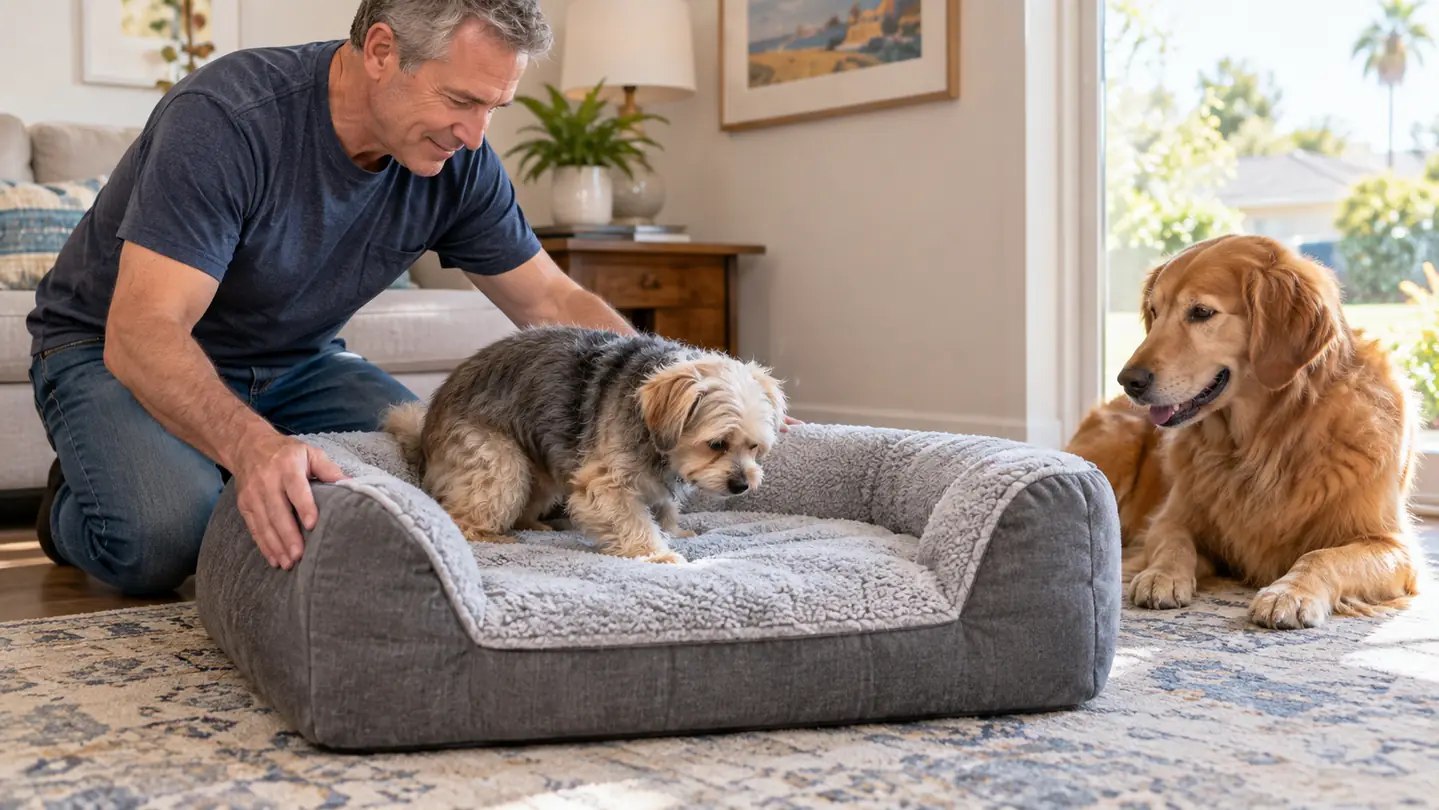
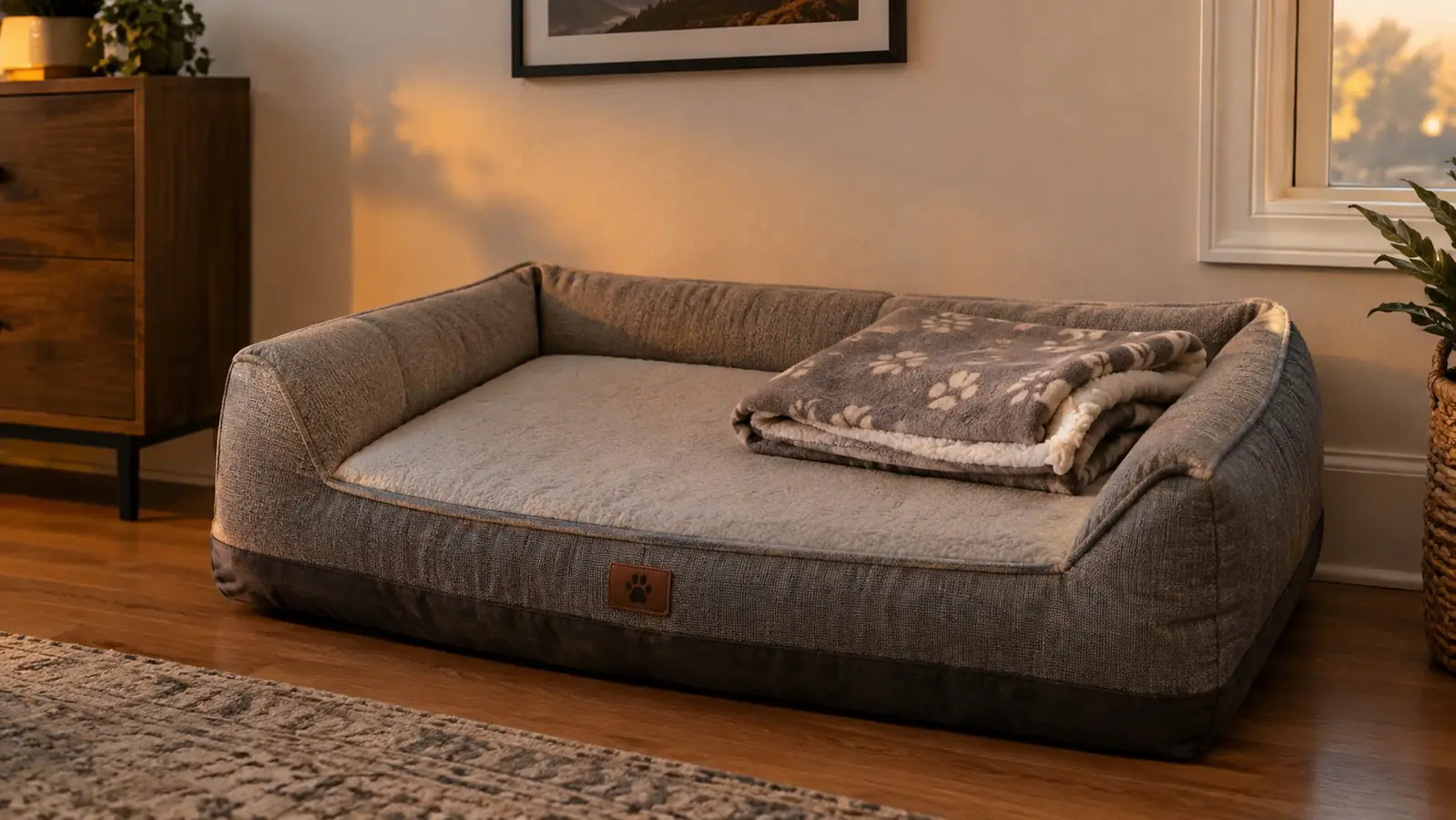
The Bedsure large bed has bolsters on three sides, which turned out to be exactly right for Daisy. She tucks her nose against the edge and it keeps her head slightly elevated, which she prefers now that she's older. It also gives her a sense of being enclosed, like the crates she slept in as a puppy, and she settles faster because of it. For a dog that sprawls flat like Tucker, I'd honestly pick a flatter version or accept that the bolsters will mostly go unused. That's not a reason to skip this bed, it's a reason to know what you're buying.
One thing worth watching with bolsters on a senior dog: some older dogs lose their balance stepping over a raised edge, especially getting out of bed in the dark. Daisy has never had trouble, but I made sure the bed sat against a wall so the open side faced the room. If your dog is wobbly on her feet, measure the bolster height and compare it to her step. A bed she can climb into without effort is the right bed, and a bolster she has to step over might not be.
Step 4: Make sure the cover comes off
A dog bed cover that doesn't come off is a bed you'll replace every six months. Older dogs have accidents, they drool, they drag mud in from the yard, and no amount of spot cleaning fixes a foam core that's soaked through. The first thing I check on any bed now is the zipper. If the cover isn't removable and machine washable, I put it back on the shelf, no matter how good the foam looks. That single feature has saved me more money than any other detail on a bed.
The Bedsure cover zips off and goes in the washing machine on cold, and it comes out looking like new. Daisy had a stomach upset in February, and I washed that cover three times in one week without the foam inside ever getting damp. That's the detail that separates a bed you'll keep for years from a bed you'll throw away. I've replaced more beds from accidents than from actual wear, and every one of those replacements was a bed with a cover that wouldn't come off.
Read the care instructions before you buy, not after the first wash. Some covers say machine washable but shrink on the first cycle or lose their shape after a few washes. I dry the Bedsure cover on low and pull it back on while it's still slightly damp, which keeps it from bunching. It's a five-minute routine I do every other weekend, and it's why the same bed has looked this good for eighteen months. A washable cover only helps if you actually wash it.
Step 5: Give it a week before you judge it
No dog switches beds overnight. Daisy ignored the Bedsure for the first two days and slept on the floor out of habit, which is normal and not a sign the bed failed. I left her old bed in the corner for a week so she had the choice, and by day four she was choosing the new one. By day six I folded the old one into the closet. Give a senior dog a week to decide and she'll usually pick the more comfortable option on her own.
What convinced me wasn't the first night, it was the morning of day nine. Daisy used to shift and resettle three or four times a night, and I'd hear her tags clinking against the floor when she got up. That week she stayed down until my alarm went off, and she got out of bed with less stiffness than she'd shown in months. A good bed won't fix arthritis, nothing will, but it does take the hard surface out of the equation, and for a nine-year-old dog that matters more than I expected.
The test I'd give any bed now is the middle-of-the-night check. At 2am, is she still on the bed or has she moved to the floor? That's the bed telling you the truth. I kept a mental note for the first month and Daisy stayed put almost every night, which is more than I can say for the beds she had before. If a new bed fails that test after a week, don't force it, move on to a different style. Comfort is personal, even for dogs, and there's no shame in trying two.
What Else Helps
A good bed is the foundation, not the whole answer. I put a flat rubber mat under Daisy's bed so it doesn't slide on the tile, and I wash the cover every other week whether it looks dirty or not, because dust and dander build up faster than you'd think. In the winter I add a fleece throw on top that I can wash separately, and she burrows into it the way she used to dig at the couch. Tucker, the hard-on-gear one, gets a tougher outer fabric on his bed, but Daisy's Bedsure cover has held up fine through a year and a half of her circling and settling. If your senior dog also uses a joint supplement or a heated pad, make sure the bed cover is compatible with both, because the combination is what gets her through a cold night.
By day six the old bed was in the closet, and Daisy was staying down until my alarm went off.
Measure her stretched out, then shop from that number
That single habit is what got Daisy into the right bed the first time. The Bedsure orthopedic large bed is where I'd start, and it's the one I'd buy again tomorrow.
Amazon Check Today's Price on Amazon →