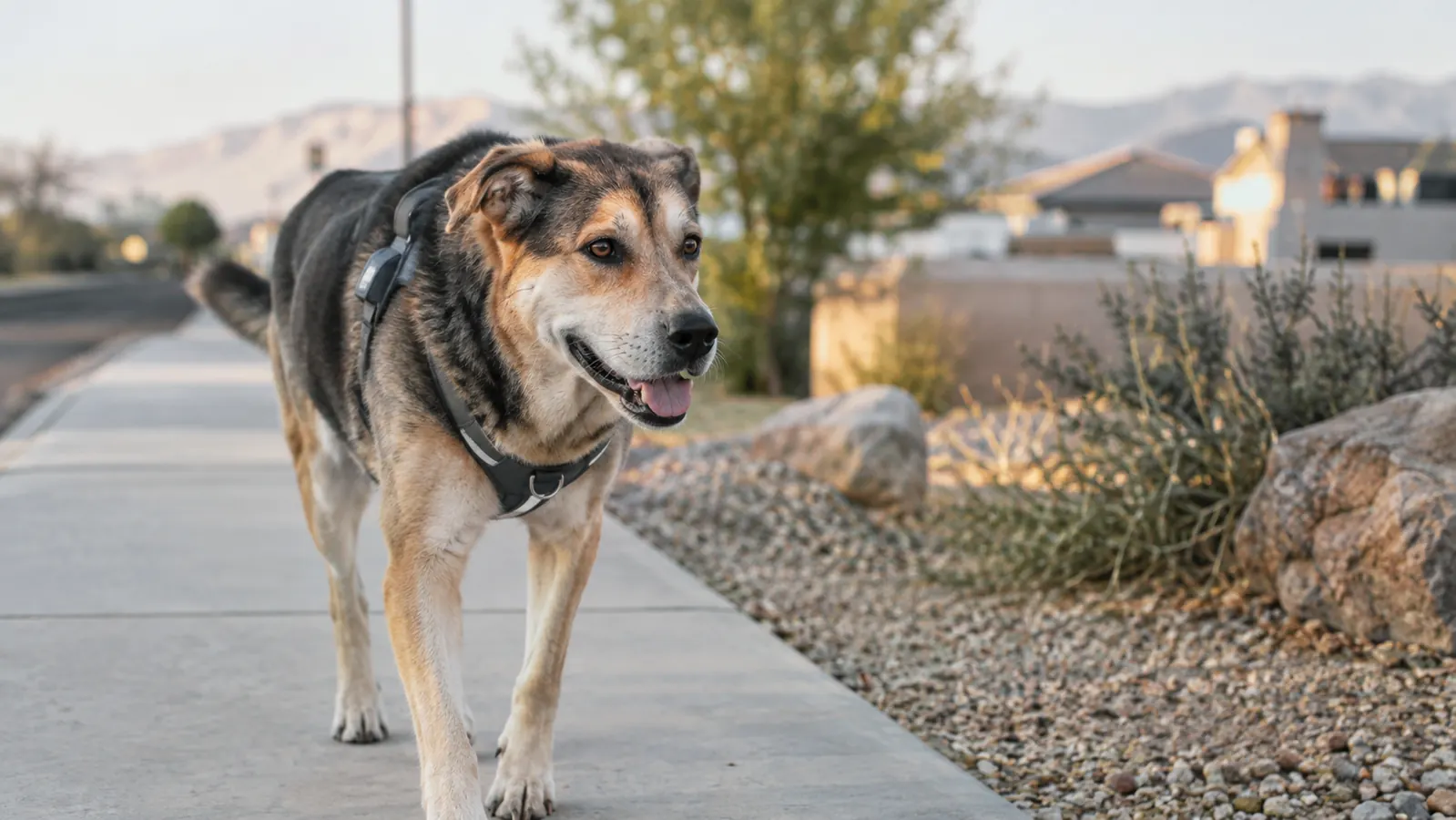
I've walked Tucker on a leash almost every day for the past three years. He's a 70 lb shepherd mix who treats every walk like a personal mission to sniff every fire hydrant in Bakersfield. When he pulls, he doesn't just lean, he puts his whole body into it. I've tried a flat collar, a head halter that made him walk backward, and two harnesses that claimed to fix pulling. One of them slipped around so much that I spent half the walk adjusting it. None of them did much. Then I picked up the rabbitgoo No Pull Harness on a recommendation from a friend, and it's been on Tucker for about five months now. This is the long version of what I've learned.
I'm not a trainer and I don't have any vet credentials. I'm a retired warehouse supervisor who lives in Bakersfield with my wife and our two dogs. This review is based on daily use, not a lab test. I wanted to know if this harness would hold up, if it would actually reduce pulling, and if it would be comfortable for a dog that's built like a small bear. After months of morning and evening walks, here's where I landed.
The Quick Verdict
It won't turn a puller into a perfect walker overnight, but the front clip gives you real control without choking, and after five months it still looks and works like new.
Amazon Check Today's Price →Check today's price on Amazon
If you've got a strong puller, this is the harness I'd start with. See the current price and customer reviews in under a minute.
Amazon Check Today's Price on Amazon →How I've Used It
The routine is simple: Tucker gets the harness on for two walks a day, one around 6:30 in the morning and one after dinner. The walk is usually about 30 minutes, sometimes longer on weekends when we head out to the trail behind the development. I've used it in triple-digit heat, in light rain, and on dusty paths. Daisy, my 9-year-old terrier mix, wears her own harness on a separate leash, so I've also had to manage two dogs at once with Tucker on the rabbitgoo.
The first thing I did was measure Tucker's chest and neck. The harness comes in sizes based on girth, and Tucker needed the medium. The packaging said the medium fits chests between 22 and 35 inches, and Tucker's chest is right around 30 inches. I measured him with a soft tape measure, which is easier than trying to guess from the size chart. The straps have a lot of adjustment room, so I could dial in the fit without feeling like I was forcing it. The instructions show where each clip should sit, and once I got the chest strap snug but not tight, the harness stayed put. That's been true on every walk since.
I also put it on Daisy a few times when I was testing fit for a friend. She's a 25 lb terrier mix, and the same size harness worked for her with the straps pulled down to their shortest setting. So the sizing range is wide, at least across the two dogs I've tried it on. I can say that the adjustment range is generous enough that one harness could cover a lot of different dogs.
One morning in July, we hit a rainstorm that came out of nowhere. By the time we got home, Tucker was soaked and the harness was covered in mud. I took it off, hosed it down, and left it on the porch to dry. Two hours later it was dry enough to put back on for the evening walk. That's the kind of low-maintenance gear I need, because I don't want to spend my walk time fussing with equipment.
What the Front Clip Actually Does
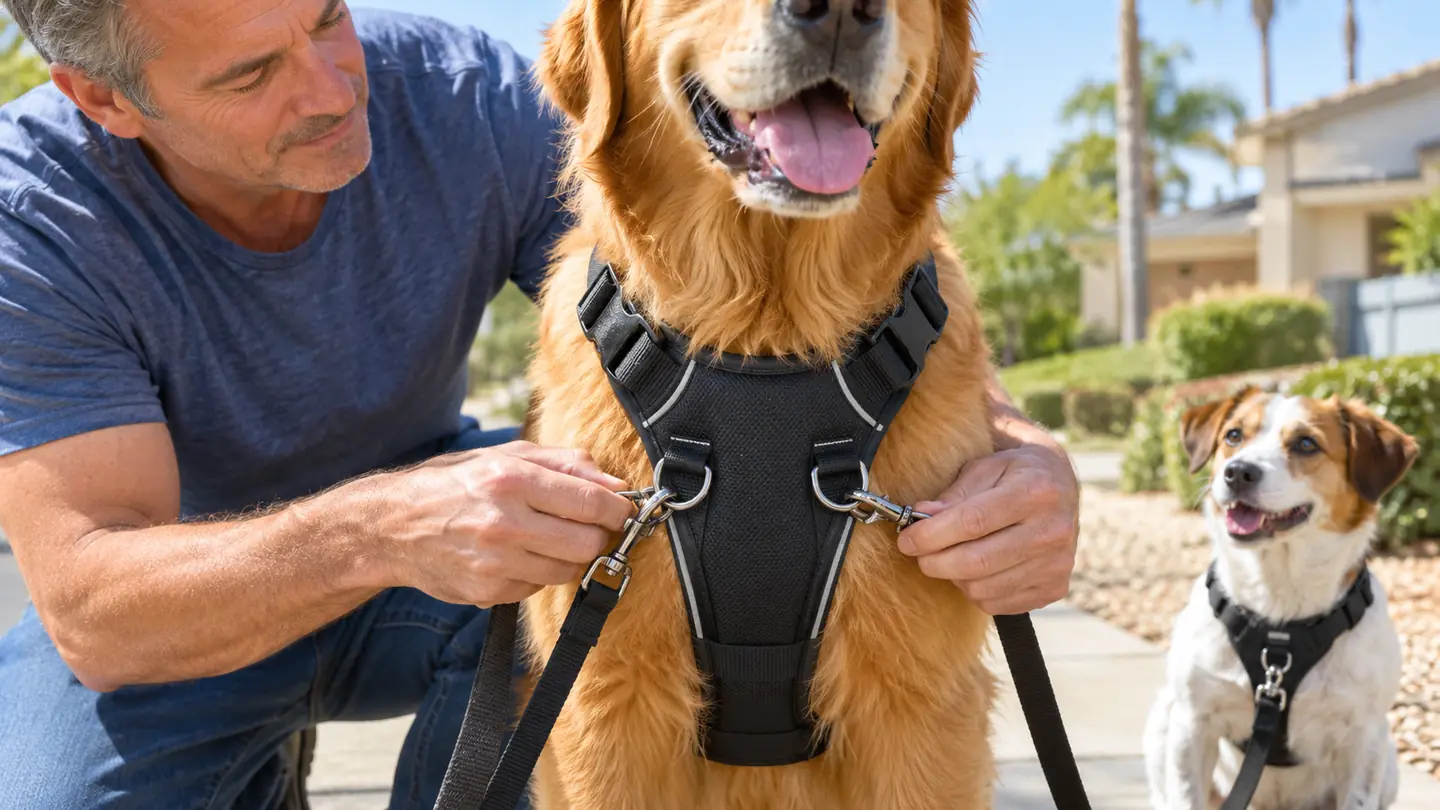
The reason I bought this harness is the front clip. When you attach the leash to the clip at the chest, a pulling dog turns sideways the moment they pull. The harness pulls the dog's own momentum around, so they end up facing you instead of dragging you down the street. That's the theory, and with Tucker it works about 80 percent of the time. He still pulls when he's excited, but the pull is short and self-correcting. He stops, looks back at me, and we keep walking. The first time I used it, I actually laughed because he turned around so fast.
The back clip is there for when you don't need the extra control. On calm days I'll use the back clip and let Tucker walk with a looser leash. The difference between the two clips is real. The front clip turns a 70 lb puller into a dog that walks beside me. The back clip gives me less control but more freedom for him to sniff. I switch between them depending on the day, and the harness handles both without any twisting or bunching. The leash swivels at the attachment point, so it doesn't get tangled around his legs.
Fit and Adjustment
Getting the fit right takes a few minutes the first time. The harness has four adjustment points: two on the chest and two on the belly. I started with the straps a little loose and tightened them over the course of a week until the harness didn't shift when Tucker pulled. The key is that you should be able to slide two fingers under the chest strap but not much more. When it's set right, the harness doesn't rub under the armpits, which was a problem I had with a cheaper harness a few years ago. That one gave Tucker a raw spot after a long walk.
One thing I learned the hard way is that you have to recheck the fit after a few weeks. The straps stretch a little, or the dog puts on or loses weight, and suddenly the harness is too loose. I found that Tucker's needed a small tightening after about a month. It took less than a minute to fix. The buckles are sturdy plastic, and they've never popped open on me, even when Tucker lunges after a squirrel. The buckles are also easy to adjust on the fly, so I can tighten a strap mid-walk if I notice it slipping. I also like that the adjustment points are easy to reach, even with a squirmy dog.
Durability and Wear
After five months of daily use, the rabbitgoo harness shows almost no wear. The stitching is holding up, the clips still click shut with a satisfying snap, and the padding on the chest hasn't flattened out. I've washed it twice in the washing machine on a gentle cycle and hung it to dry, and it came out looking the same as the day I opened the box. That's more than I can say for a harness I bought at a big-box store last year, which had a torn strap within three weeks. I've also dropped it on the pavement a few times, and it didn't scuff up badly.
The only thing I've noticed is a slight fraying on the edge of the belly strap where it rubs against Tucker's chest. It's cosmetic, not structural. The strap is still solid, and I don't see it becoming a problem anytime soon. I also appreciate that the material is easy to clean. A muddy walk ends with me hosing the harness off in the backyard, and it dries fast enough to be ready for the evening walk. I've never had to use the washer more than twice, because most days a rinse does the job. The quick-release buckles are easy to undo with one hand, which helps when you're trying to get a wet dog inside the house.
Walking Two Dogs
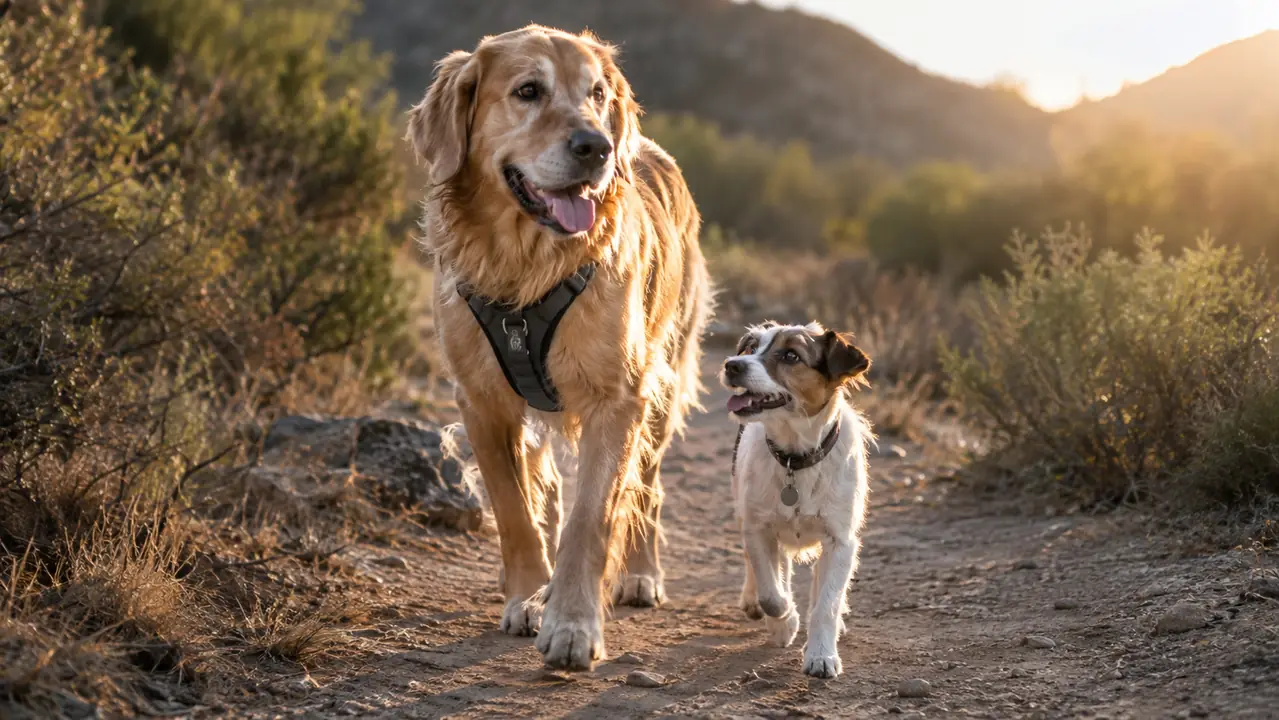
The real test came when I started walking Tucker and Daisy together. Daisy is small and slow, and she has her own ideas about which side of the road she wants to be on. With Tucker on the rabbitgoo and Daisy on a separate leash, I had to manage two different walking styles at once. The front clip on Tucker's harness made that manageable. When he tried to surge ahead, the harness turned him back to me, and I could keep Daisy on her own pace without being dragged. It's not an instant solution, but it gave me enough control that I could actually train him while walking. The ability to switch between front and back clips without changing the fit is something I didn't know I needed until I had it.
On the days when Tucker pulls hardest, which is usually right after we pass the neighbor's cat, the harness gives me enough control to stop him without yanking on his neck. I don't like choke collars, and I've never wanted to hurt a dog to get them to behave. This harness lets me redirect his energy without that. It's not a cure-all, and it won't stop a determined dog from pulling if you don't put in the training, but it gives you the leverage you need to do the training. I've also noticed that the harness doesn't chafe even on long walks, which matters when we're out for an hour. I've also found that the harness doesn't interfere with Tucker's movement when he's running in the yard, so it's not just a walking harness.
What I Liked
- Front clip genuinely reduces pulling
- Sturdy construction that survived daily use
- Adjustable enough for two different sized dogs
- Easy to wash and dry
- Two leash clips give you options for control
Where It Falls Short
- Straps need occasional re-tightening
- Belly strap frayed slightly at the edge
- Takes a few tries to get the fit right the first time
- Not a fix for pulling by itself, you still need training
The front clip turned my 70 lb puller into a dog that walks beside me, and after five months the harness still looks and works like new.
Who This Is For
This harness is for anyone who has a dog that pulls on the leash and who wants a simple, affordable solution that doesn't involve choking or pain. If you have a strong dog like Tucker, the front clip gives you real mechanical advantage. If you have a smaller dog like Daisy, the same harness works with the straps adjusted down. The two-clip design means you can use it as a normal harness on calm days and switch to the front clip when you need more control. I've used it in both modes, and it's nice to have the option without having to buy a second harness. And because it comes in multiple sizes, you can find a fit for everything from a 10 lb Chihuahua to a 120 lb Great Dane, as long as you measure carefully.
It's also a good fit for people who walk in hot weather. The padding is breathable, and I've never had a problem with Tucker getting overheated or developing a rash from the material. I've used it in the high desert summer, and the harness doesn't hold heat the way some padded harnesses do. If you're a daily walker who needs gear that works in real conditions, this is a solid pick. I've even worn it on my own shoulder when I had to carry Tucker's harness to the truck, and it's lightweight enough to not be a burden. I've also used it on the trail where there's loose gravel, and the harness didn't shift or rub, even when Tucker was trotting.
Who Should Skip It
If you're looking for a harness that will instantly fix pulling without any training, skip this one. No harness does that. The rabbitgoo gives you control, but you still have to teach your dog that pulling doesn't get them where they want to go. If you're not willing to put in that work, you'll be disappointed no matter what harness you buy. I've seen reviews from people who expected the harness to do everything, and they were frustrated because their dog still pulled on the first day. I've read enough reviews to know that some people expect a harness to be a magic wand, and that's not what this is.
I'd also skip it if your dog is a dedicated escape artist. I've seen a few reviews where people had a dog back out of the harness, and I could see how that could happen if the fit isn't perfect. Tucker hasn't managed it, but he's not a wiggly dog. If you have a dog that knows how to slip out of gear, you might need a harness with a belly strap that goes around the hind legs, which this one doesn't have. For a normal dog that stays put when the straps are tight, it's been secure for me. If you're between sizes, I'd recommend going up a size and tightening the straps, rather than squeezing into a smaller one.
Ready to Walk Without the Tug-of-War?
If a strong puller is wearing you out, the rabbitgoo No Pull Harness is worth a look. Check today's price and see what other owners say.
Amazon Check Today's Price on Amazon →