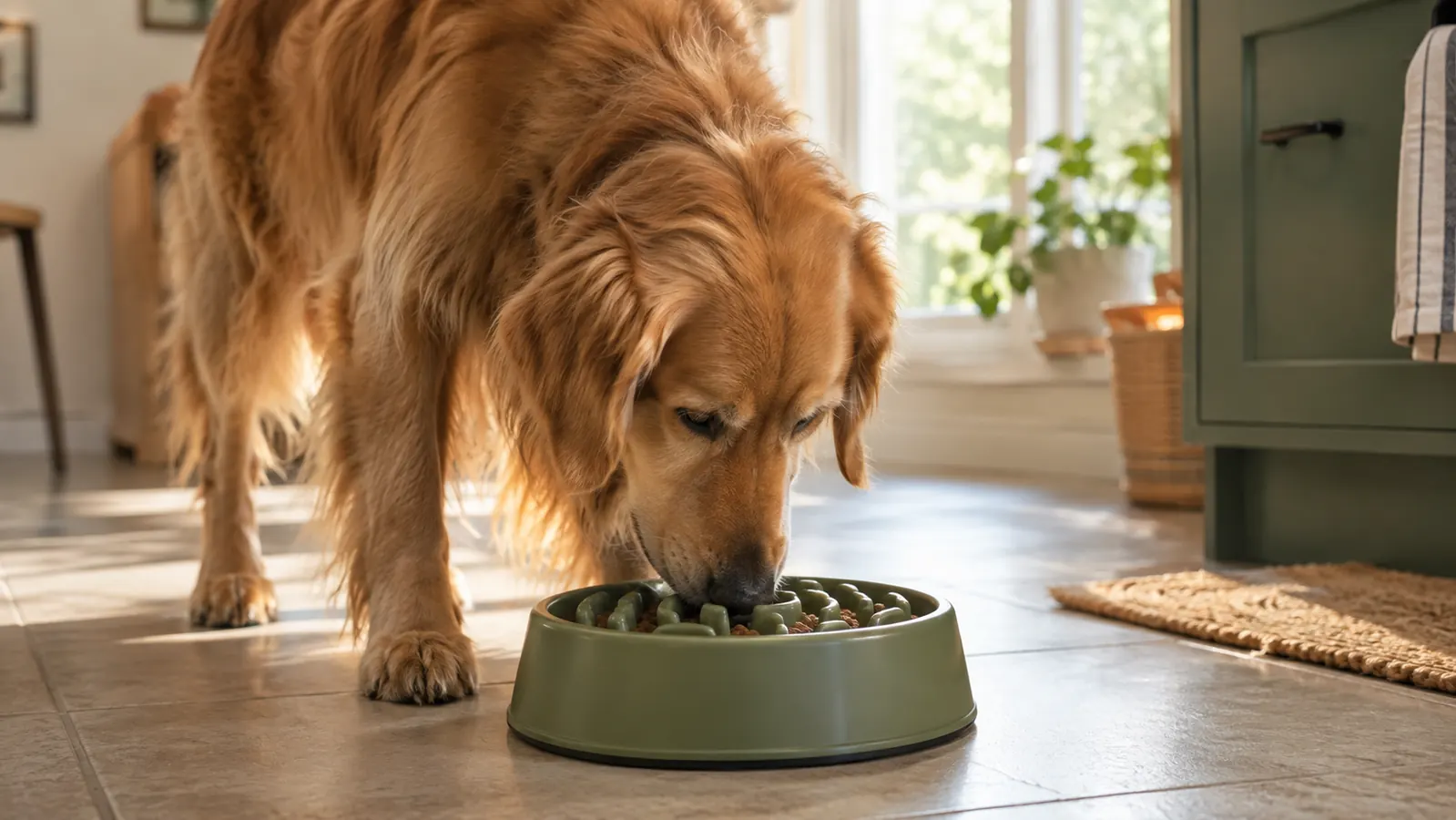
Tucker used to finish his dinner before I finished filling Daisy's bowl. That is not an exaggeration. The 70-pound shepherd mix would hit his stainless bowl, and four seconds later it was empty, and he would be standing over Daisy's bowl with that look that says, what's next? I watched him swallow dry kibble whole, then cough it back up on the porch fifteen minutes later. Our vet said he needed to slow down, which sounds simple until you have tried to get a determined dog to slow down. That is how I ended up with the Outward Hound Fun Feeder Slo Bowl, and why I am writing this after seven months of daily use.
The Quick Verdict
The Outward Hound Fun Feeder did exactly what it promised for my gulper. Tucker went from inhaling dinner in four seconds to working through it in about four minutes, and the after-meal vomiting stopped. It is not a fix for every fast eater, and it takes a week of getting used to, but for us it has earned a permanent spot on the kitchen floor.
Amazon Check Today's Price →If your dog inhales dinner, this bowl earns its place in a week
I watched Tucker slow from four seconds to four minutes per meal, with no more kibble coming back up on the porch. If that sounds like your dog, the Outward Hound Fun Feeder is worth a close look.
Amazon Check Today's Price on Amazon →How I've Used It
I have used this bowl twice a day, every day, for about seven months now. Tucker gets two cups of dry kibble in the morning and two more at night. Daisy, the 25-pound terrier mix, eats from the same style of bowl in the smaller size, because she is the opposite problem: she eats slow, but she is picky, and the ridges seem to keep her interested. The Outward Hound bowl has been through both of their meal routines, plus the occasional wet food topper, plus a couple of rounds in the dishwasher.
The setup could not be simpler. The bowl sits flat on the kitchen floor, and the non-slip base holds it in place even when Tucker is working at it hard. I pour the kibble in, spread it around so it settles into the channels, and let him at it. The first few days he pawed at the bowl and looked at me like I had broken his food. By the end of the first week he had figured it out, and now he eats with his head down and his nose working the grooves like he is solving a puzzle.
I want to be clear about how I tested it. I did not run a lab study. I watched a 70-pound dog eat thousands of meals from this bowl, and I kept a rough mental log of what changed. That is the kind of evidence that matters to me, a guy who just wants his dog to stop choking down food and throwing it back up.
What the Bowl Actually Does
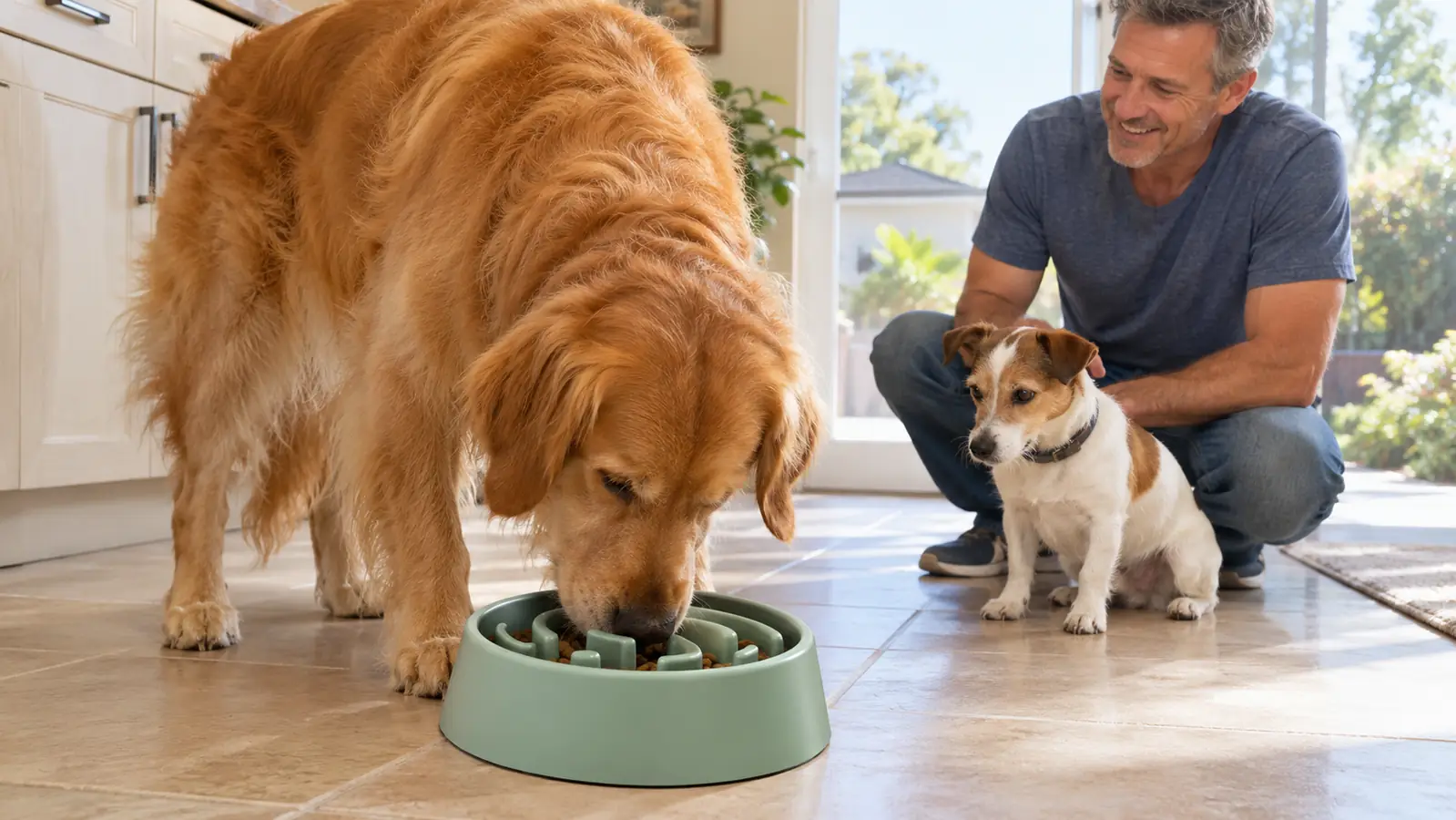
The idea behind a slow feeder is simple: spread the food out and make the dog work for it. The Outward Hound Fun Feeder does this with a raised maze of ridges and peaks inside the bowl. Instead of one open surface where a dog can scoop up a mouthful of kibble in a single gulp, the food sits in the valleys between the bumps. The dog has to curl his tongue around each ridge to get at the kibble, one piece at a time, sometimes two.
The medium size holds two cups, which is exactly Tucker's portion. That matters more than I expected. If the bowl were too big, he could sweep his whole muzzle across the surface. At two cups, the food is packed into the channels and he has to work each one. The ridges are deep enough to slow him down but not so deep that he gets frustrated and gives up.
The non-slip base is the part I did not expect to care about. Tucker is a big dog with a big appetite, and he used to push his old bowl across the kitchen floor while he ate. This one does not move. The rubber rings on the bottom grip the tile, and even when he is shoving his whole face into it, the bowl stays put. That sounds like a small thing, but it means I am not chasing a bowl around the kitchen twice a day.
What Changed for Tucker
The honest number is that Tucker went from eating his dinner in about four seconds to taking around four minutes. That is a big change in meal time, and it happened within the first week. The first meal took him almost ten minutes because he was confused, and then he settled into a steady rhythm.
More important than the time is what stopped happening. Before the slow feeder, Tucker threw up after meals maybe twice a week. He would inhale the kibble, drink a bunch of water, and then cough it all back up on the porch. Since we switched to the Outward Hound bowl, that has happened exactly once, and it was after a day when I gave him table scraps I should not have given him. The gulping, the coughing, the mess on the porch, all of it basically stopped.
He also seems more settled after meals. With the old bowl, he would finish in seconds and then pace around looking for more food, or try to get at Daisy's bowl. Now he eats for a few minutes, works through the whole bowl, and then walks away and lies down. I do not know if that is because he is eating slower or because the extra time lets his stomach catch up. I only know the behavior is different, and better.
One thing I should mention is that Tucker is a big dog with a deep chest, and the vet has talked to us about the risk of bloat, which is serious. Slowing him down was one of the few things we could actually control at home. I am not saying a bowl prevents bloat, because nothing does, but eating at a sane pace is part of the routine our vet recommended, and this bowl is the tool that made it possible.
Cleaning and Everyday Life
The tradeoff with any bowl that has ridges is that it is harder to clean than a flat bowl. That is the honest downside. Kibble crumbs and a little wet food get stuck in the grooves, and you cannot just run a sponge across the surface and be done. I rinse it right after meals, and it goes in the dishwasher at night. It comes out clean, but I do look at the grooves and make sure nothing is stuck in there.
I also learned the hard way that you have to spread the food out when you fill it. If you just dump the kibble in the middle, the dog can scoop out the center pile before he has to work the ridges. The instructions say to distribute the food, and they are right. It takes an extra two seconds per meal, and it makes the whole thing work the way it is supposed to.
On durability, this bowl has survived seven months of daily abuse from a strong dog who used to treat his bowl like a chew toy. There are no cracks, the ridges are intact, and the non-slip base still grips the floor. Daisy's smaller bowl has been through the same routine with no problems. I have no doubt this thing will last for years.
A note on the dishwasher: this bowl has survived regular cycles without warping or cracking, and the rubber base has not peeled or stretched. I put it on the top rack to be safe, and it comes out clean and dry. The only thing I would not do is leave it to soak in a sink full of hot water for hours, because there is no reason to, and the rubber does not need it.
Alternatives I Considered
The first thing I tried was just feeding Tucker smaller meals more often. That helped a little, but it meant four or five feeding times a day, and it did not stop him from gulping each smaller portion. I also tried scattering his kibble across a baking sheet, which slowed him down but turned the kitchen floor into a minefield of loose kibble and made a mess that Daisy cleaned up before I could.
I looked at puzzle feeders too, the kind where the dog has to slide pieces or lift flaps to find the food. Those are fun, and Tucker enjoys them, but they are a bigger production than a daily bowl. He has to be shown how each one works, and some of them hold less than a full meal, so I would still need a second bowl. The Outward Hound bowl is the one thing I can pour dinner into and walk away from.
The closest competitor I considered was a plain bowl with a wide, shallow shape, on the theory that spreading food out flat would slow him down. It did slow him a little, but not nearly as much as the raised ridges, because a determined dog can still sweep a flat surface with his whole tongue. The ridges are what make the difference, and that is why we stuck with the Fun Feeder.
Who It's Really For and Who It Isn't
In my months with this bowl, I have a clear picture of who should buy it. It is for the dog who finishes food in seconds, throws up after meals, or acts like every meal is his last. It is for the owner who is tired of watching that happen and wants a simple fix that does not require training a dog to chew, which, if you have tried, you know is not simple.
It is not for every dog. A slow, methodical eater does not need it, and a dog who already eats in small bites will probably just be confused by the ridges. And if you have a dog who is so anxious about food that he will refuse to eat from a new bowl, you may need a gentler introduction than I gave Tucker, who is food-obsessed enough that he would eat from a tire if you put kibble in it.
I will also say that the bowl does not replace a vet visit. If your dog is vomiting after meals regularly, the right move is to talk to your vet, not just buy a bowl. For Tucker, the gulping was the problem, and slowing him down fixed it. But I am not a vet, and I am not going to pretend this bowl is a medical solution. It is a feeding tool, and a good one.
What I Liked
- Tucker went from four seconds per meal to about four minutes, and the after-meal vomiting stopped
- Non-slip base holds firm even under a 70-pound dog working at it
- Ridges are deep enough to slow a gulper but not so deep that he gives up
- Survived seven months of daily use and regular dishwasher cycles without a crack
- Dishwasher safe and easy to keep clean if you rinse it right after meals
Where It Falls Short
- Ridges trap crumbs and wet food, so it takes more attention to clean than a flat bowl
- You have to spread the food across the channels or the dog scoops the middle pile
- Not useful for a dog who already eats slowly; it will just slow them down for no reason
- Food-obsessed dogs may paw at it or try to flip it the first few days
The honest number is that Tucker went from eating his dinner in about four seconds to taking around four minutes, and the vomiting that used to happen twice a week basically stopped.
Who This Is For
Buy the Outward Hound Fun Feeder if you have a fast eater who gulps food, throws up after meals, or finishes before the other dog has started. It is also a good fit if you want to give your dog a little mental work at mealtime without buying a whole puzzle toy, and if you want a bowl that will not slide across the floor while a strong dog eats. For us, it fixed a real problem, and it has not worn out or failed in seven months.
Who Should Skip It
Skip it if your dog eats slowly and methodically on their own, because the ridges will just get in the way. Skip it if your dog is so anxious about food that a new bowl might make them refuse to eat; you will need a slower introduction. And if your dog is vomiting regularly for reasons other than eating too fast, see a vet before you buy anything. This bowl solved Tucker's gulping problem. It is not a medical device, and I would not pretend otherwise.
Seven months in, this bowl is still on my kitchen floor
Tucker still eats from the Outward Hound Fun Feeder twice a day, and it still does the job. If your dog inhales dinner, this is the fix that worked for us.
Amazon Check Today's Price on Amazon →