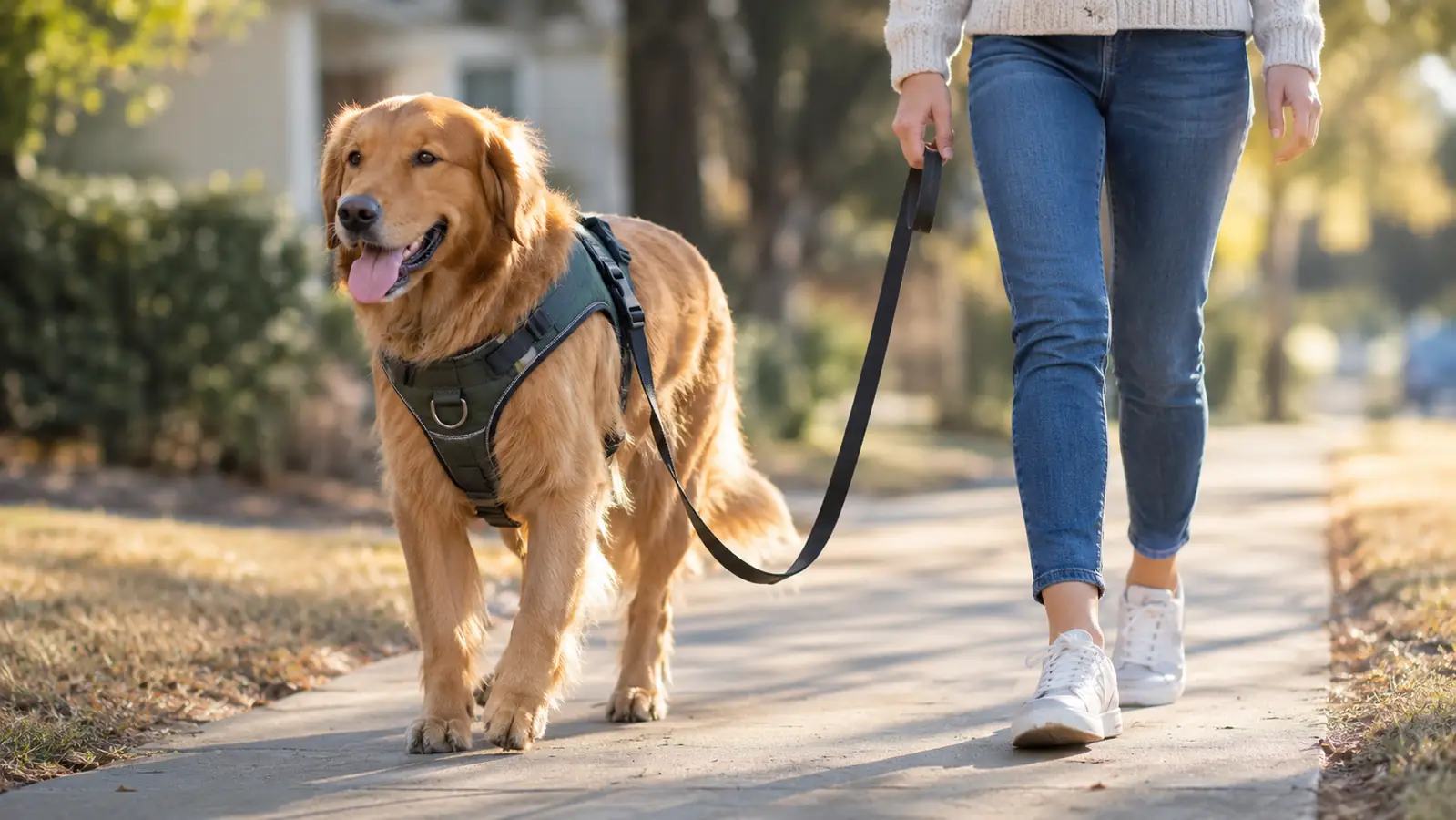
Some dogs walk like they are late for something. Tucker, my 70 lb shepherd mix, treated the front door like a starting gate. For years I figured a strong dog needed a strong hand, so I braced my feet, held the leash tight, and let him drag me around the block. I had tried every collar in the store and a back-clip harness that only made things worse. It wore both of us out, and it never got better. Walks were the worst part of the day, and I dreaded them as much as he loved them.
Then a friend let me borrow a rabbitgoo no-pull harness with a second clip on the front of the chest. That one clip changed how Tucker walks more than any collar or correction ever did. Here are the ten reasons it works, in the order I noticed them.
The front-clip harness that fixed our walks
Two leash clips, a padded chest, and a front ring that turns a pull into a turn. This is the harness we reach for every single walk.
Amazon Check Today's Price on Amazon →The harder he pulls, the more he turns himself around
The front clip sits at the center of the chest. When a dog lunges forward, the leash pulls that clip toward you, which rotates the dog's front end around. A 70 lb dog that is pulling hard ends up facing you instead of the squirrel. You barely have to do anything. The dog's own momentum does the correcting, and that is why the design works on big, strong dogs without you needing to be stronger than they are. The first time it happened, I actually laughed. Tucker hit the end of the leash, the harness turned him in a half circle, and he looked up at me like he was the one who had been tricked.
It keeps pressure off the neck and throat
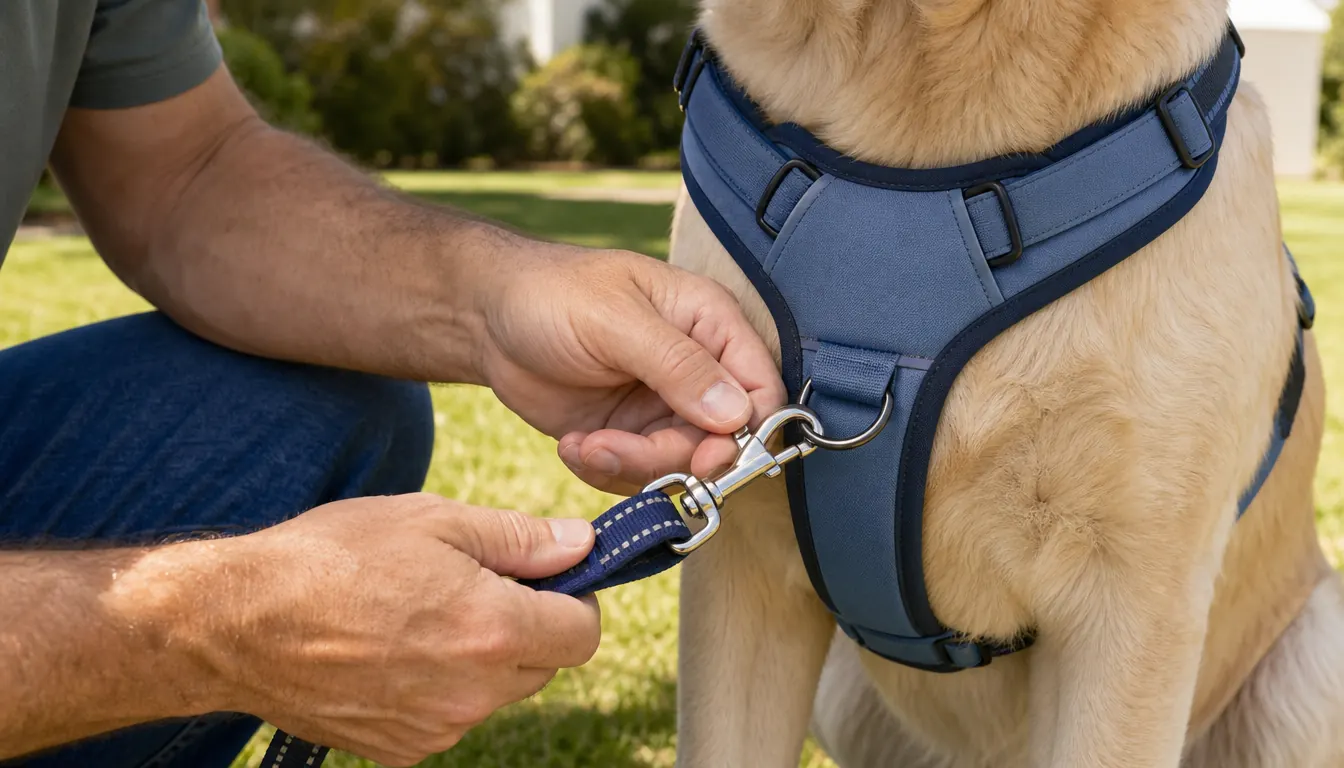
A collar concentrates all the force of a pull onto the windpipe. Tucker used to cough and gag on walks, especially when he locked onto a cat. The rabbitgoo spreads the same force across the chest and shoulders. No more coughing, no more choking sounds, and no more of me wondering if I was hurting him just by taking him outside. Our vet had mentioned the coughing could be his trachea taking a beating, and that was the push I needed to try something different.
It works with the dog's body, not against it
A dog's pulling power comes from the chest and shoulders. A collar fights that power at the neck, which is the weakest point. The front clip steers from the chest, the exact place the dog is driving from. You are not overpowering the dog. You are redirecting the engine. That is the whole trick, and it is why this harness feels effortless compared to a collar. Think of it like steering a shopping cart from the front instead of dragging it by the handle from behind.
Two clips mean one harness for two jobs
The rabbitgoo has a front clip for walks that need steering and a back clip for relaxed strolls when Tucker is already behaving. I clip the leash to the front for the first ten minutes, then move it to the back once he settles. One harness, two modes, no second purchase. With two dogs in the house, I have bought enough gear that I appreciate a tool that pulls double duty. On mornings when Daisy is stiff, I use the front clip on her too, just to keep the walk gentle and steady.
The padding means the correction does not hurt
A harness only works if the dog does not fight it. The rabbitgoo has a padded chest panel and soft lining, so when the front clip turns Tucker, he feels pressure, not pain. A dog that is not in discomfort stops fighting the tool and starts paying attention to you. That is when the actual training happens. Tucker does not love wearing gear, but he stopped resisting this harness after two days. That tells me the fit is doing its job.
You never have to yank or jerk the leash
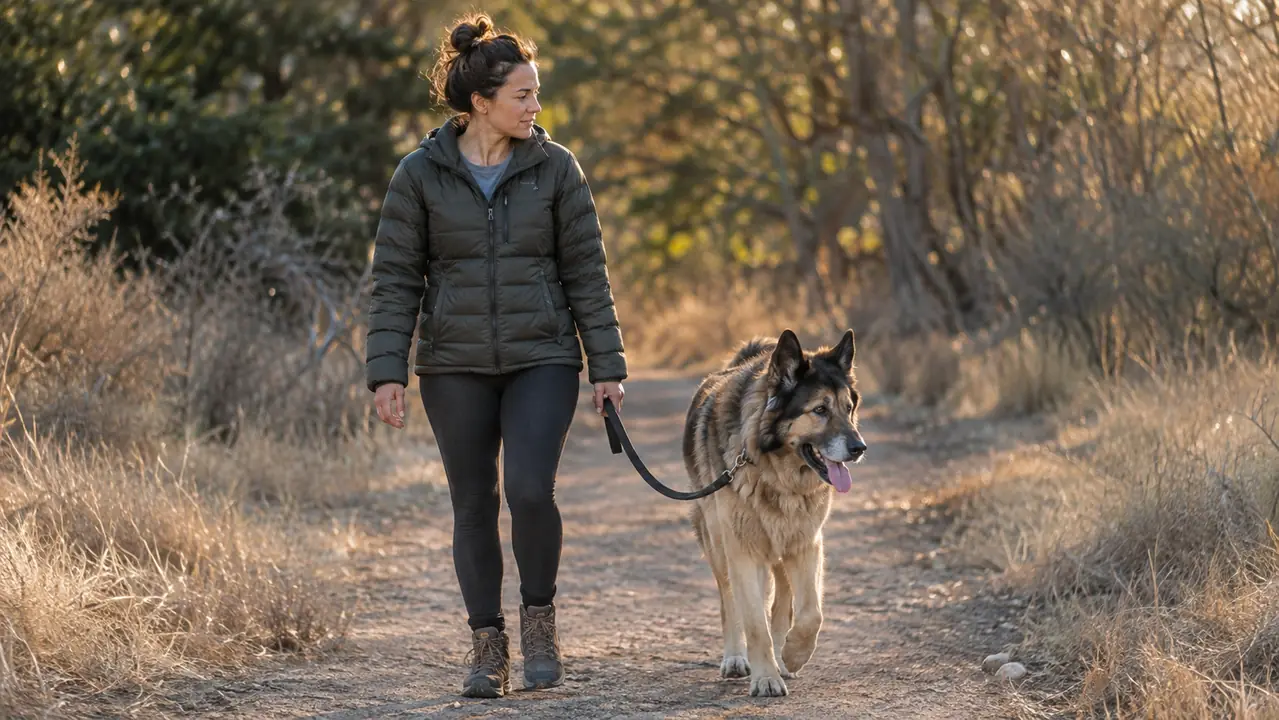
Before this harness, I corrected Tucker with sharp tugs. It made him more excited, not less. With the front clip, a simple stop or a change of direction is enough. When he pulls, I stop walking. The harness turns him toward me. He learns that pulling does not get him anywhere, and I never have to jerk him around to make the point. The old way made both of us frustrated. The new way, we just stop, wait, and go again. It is boring, and boring works.
It gives you control of the dog's center of mass
The front clip sits at the chest, close to the dog's center of gravity. That means a small correction redirects the whole dog, not just the head. When Tucker locks onto a rabbit across the street, I can turn his entire body away with one hand. With a collar, I was just dragging his head while his legs kept going. That one detail is why the harness works so well. It is not doing anything fancy. It is just better mechanics.
It makes reactive moments calmer
Tucker is fine with people but loses his mind over other dogs on leash. The front clip lets me turn him in a smooth circle before he can react. No jerking, no yelling. We step off to the side, he settles, and we move on. The harness does not fix his feelings, but it gives me a way to manage the moment without making things worse. We have even started passing dogs without crossing the street, which never happened before.
It works for the old dog too, not just the strong one
Daisy is 9, a 25 lb terrier mix, and she is stiff in the mornings. She does not pull much, but she does lunge after squirrels. The front clip on the rabbitgoo steers her gently without any pressure on her neck. The adjustable straps let the harness fit her small frame, and a walk on the front clip is easier on her than a collar ever was. She still gets her say about which direction we go, but she does not pay for it with a sore neck afterward.
It teaches loose-leash walking, so you can eventually move to the back clip
The front clip is not a punishment. It is a lesson. Over a few months, Tucker learned that pulling makes him turn around and stopping makes the walk continue. Now he walks loose-leash most days, and I can clip to the back ring instead of the front. The harness stayed the same, but the training wheels came off. That is the sign of a tool that actually teaches. Some tools you keep forever. This is one of them, even after the pulling stopped.
What I'd Skip
I would skip the no-name harnesses with thin straps that dig into a dog's shoulders. The first one I tried had straps that rubbed Tucker raw, and the front clip tore out of the fabric in three weeks. I would also skip any harness that only has a back clip if your dog pulls, because a back clip gives the dog all the leverage. And I would skip any harness that promises to fix pulling with zero effort from you. The rabbitgoo works because it steers and it teaches. You still have to show up for the walks. Buying cheap gear twice is more expensive than buying decent gear once.
The front clip turned a 70 lb puller into a dog who walks on a loose leash in about three months. No collar ever came close.
If you have a dog that pulls, you do not need a stronger leash or a sterner voice. You need a different point of attachment. The rabbitgoo front clip gave me that, and it gave Tucker a walk he actually enjoys. That is a fair trade for any dog owner. It is also the cheapest fix I have found for the most frustrating part of the day.
Give the front clip two weeks
One harness, two leash clips, and a dog that finally walks beside you instead of dragging you. It worked for Tucker, and it is the first thing I recommend to anyone with a strong puller.
Amazon Check Today's Price on Amazon →