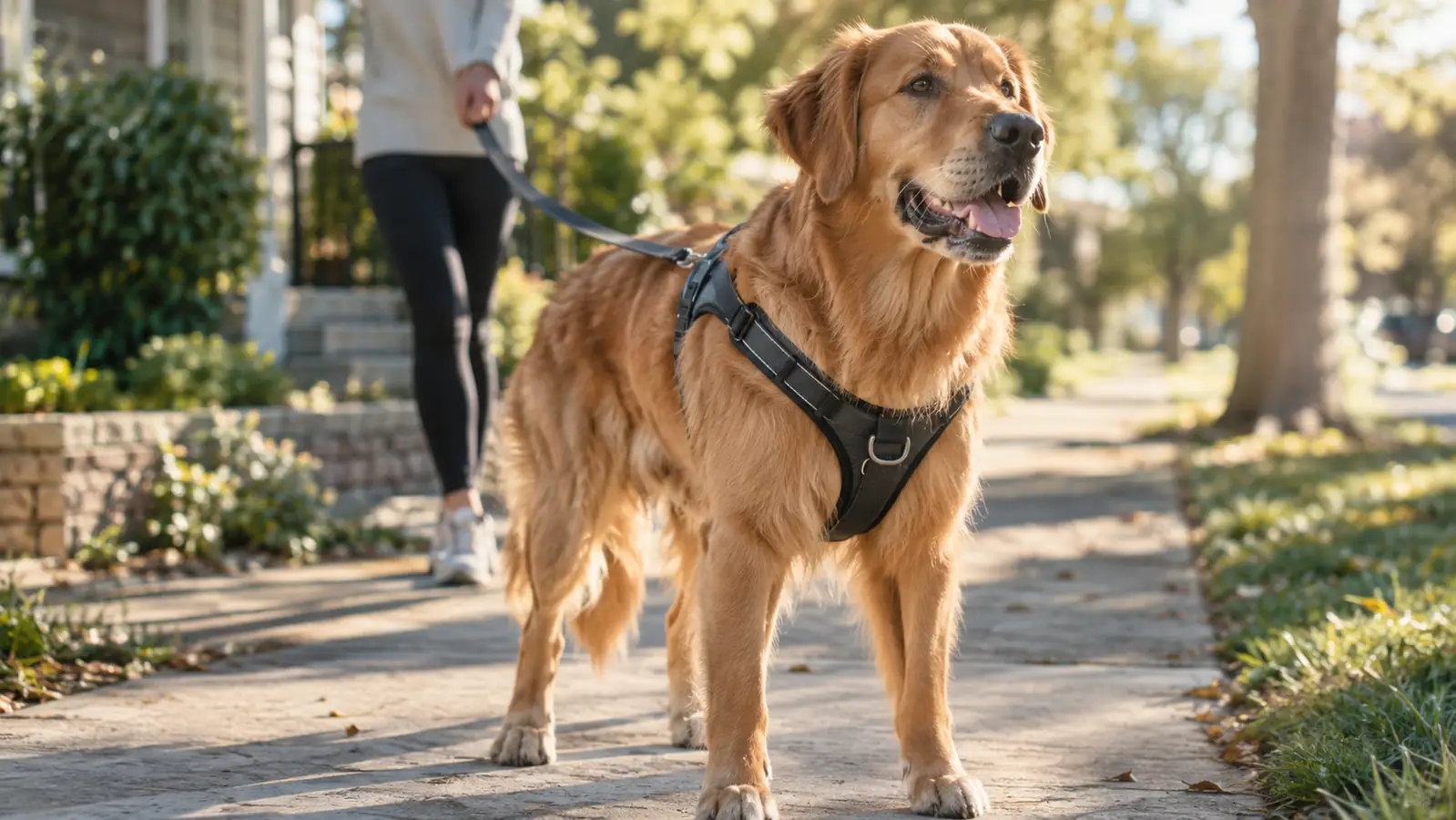
Two dogs, one sidewalk, six months of testing. That is the short version of how I ended up here. Tucker, my 70 pound shepherd mix, pulls hard enough that he has worn through two collars and snapped a leash clip on a Tuesday morning walk last March. Daisy, my 25 pound terrier mix, is nine now and stiff in the mornings, so she does not need the same level of control, but she is picky about anything that rubs her chest when we go the long way around the block. I bought the rabbitgoo No Pull Harness and the PetSafe Easy Walk at the same time, ran them on alternating weeks, and kept a notebook in the truck so I did not have to trust my memory on which one was doing the work.
The short answer, before I get into the details: the rabbitgoo is the better everyday harness for most people, and the Easy Walk is the better tool for one specific problem. If you have a strong puller and you want the option to clip the leash two ways, with padding that does not chafe on a long walk, the rabbitgoo wins. If you have a dog that only lunges in short bursts and you want the firmest steering available, the Easy Walk has a real edge. Here is the full breakdown, the way I would explain it to a neighbor over the fence, with the honest wins and losses for both.
How I Tested Both Harnesses
Both harnesses went on the same dogs, on the same streets, in the same Bakersfield heat. Weekday mornings I walked before it got hot, usually around 6:15, and Saturday evenings I walked when the sidewalk was busier and there were more dogs to react to. I timed every walk with the stopwatch on my phone, counted how many times I had to correct Tucker when he pulled, and checked both dogs for rubbing marks the minute we got home. I also washed each harness three times over the six months, once in the washing machine on cold and twice by hand in the sink, because that is what actually happens to gear here.
For the first two weeks I swapped harnesses every other day so neither dog got used to one. Then I ran the rabbitgoo for three straight weeks and the Easy Walk for three straight weeks. Tucker is the real test. He throws his whole weight into a pull the way a 70 pound dog does, and he is hard on gear, so if a seam is going to give, he finds it. The afternoon he snapped the old leash clip he was after a cat that had wandered into the neighbor's yard, and that was the day I decided I was done with collars entirely. From then on, both dogs wore a harness on every walk, rain or shine. Daisy is the comfort test. She is nine, a little stiff in the morning, and she will stop dead and refuse to move if a strap digs into her chest, so any harness that made her sit down mid-walk told me something immediately.
| rabbitgoo No Pull Harness | PetSafe Easy Walk | |
|---|---|---|
| Leash clips | Two clips, front for training and back for calm walks | One front clip plus a back ring, front is the main event |
| Steering | Front clip steers well, back clip is relaxed | Front clip is the firmest steering of any harness I tested |
| Padding | Padded chest and belly panels, no chafing on long walks | Lightweight webbing, minimal padding |
| Fit options | Step-in or over-head, straps adjust on both sides and girth | Over-head only, single adjustment |
| Durability | Stitched seams and buckles held up to six months of daily use | Lighter build, fine for moderate pullers |
| Best for | Daily walkers with a strong puller and a comfort picky dog | Short walks with a dog that lunges in bursts |
Where rabbitgoo Wins
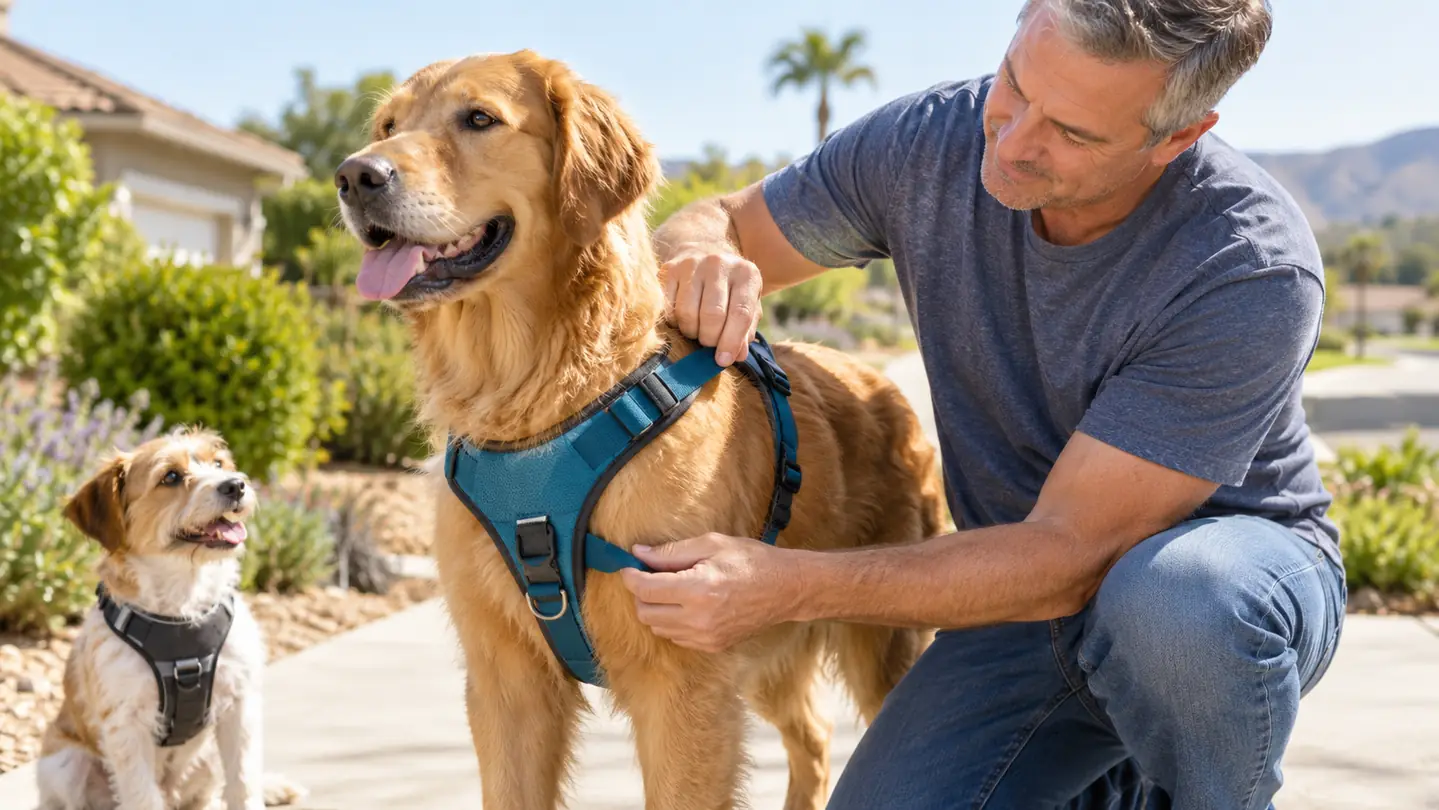
The rabbitgoo's biggest advantage is that it gives you two ways to attach the leash. The front clip on the chest is for training, because it turns the dog's shoulders instead of letting him pull straight ahead, and the back clip is for the days when you just want a normal walk without the steering. I used the back clip for Daisy on her easy mornings and the front clip for Tucker on the days he was wound up. Having the choice meant I did not have to own two different harnesses for two very different dogs, and it meant I did not have to switch gear depending on the day. That flexibility is the main reason it stayed on the hook by the back door.
The padding is the second reason it won my everyday slot. The chest and belly panels are padded, and after a 40 minute walk in the heat I could see the difference on Daisy. With the Easy Walk, her terrier fur would be pressed flat where the webbing sat and she would scratch at it when we got home. With the rabbitgoo, no scratching, no flat spots, no stopping to fuss. I also put the rabbitgoo through the wash three times over the six months, once in the machine on cold and twice by hand, and the stitching held every time. The buckles still click clean, the straps still adjust, and nothing has frayed where it rubs under the armpit. For a harness that gets used every single day, that is the durability test that matters, and it passed.
Fit is where the rabbitgoo makes life easy. It goes on two ways: step-in, which I used for Daisy because she hates things going over her head, or over the head, which Tucker does not mind. The straps adjust on both sides and around the girth, so I could get a snug fit on a 70 pound dog and a 25 pound dog from the same harness, just by moving the buckles. That is the part that surprised me. I expected to buy the medium for Tucker and have it be loose on Daisy, but the adjustment range covered both of them without the straps bottoming out. I checked the fit twice a week, because a harness that loosens over time stops doing its job, and the rabbitgoo stayed put.
Where Easy Walk Wins
I have to give the Easy Walk its due on steering, because it is genuinely the firmest front clip I have used. The Easy Walk uses a martingale loop around the chest, which tightens gently when the dog pulls, and that cinch is what stops Tucker faster than anything else. On a Saturday morning when he locked onto a squirrel and lunged, the Easy Walk turned him back to me in one step. I counted it. One step, and he was facing me instead of the tree. The rabbitgoo did the same job, but it took two or three steps and a verbal correction before he settled. If you have a dog that lunges hard and you want the quickest response, the Easy Walk's steering is the reason to choose it. That is not a small thing. A dog that lunges is a dog that can drag you into traffic, and the faster the correction, the safer the walk.
The Easy Walk is also lighter and less bulky. There is almost no padding, just clean webbing, which means it packs down small and does not trap heat the way a padded vest does. On a 95 degree afternoon that matters, and Bakersfield gives you a lot of those. I noticed it most on the Saturday evening walks, when the pavement was still warm and the air was still. Daisy was less hot and less bothered at the end of those walks in the Easy Walk than in the padded rabbitgoo, and I want to be fair about that. And because the design is simpler, there is less to go wrong over time. No big panels, no extra buckles, fewer places for a hard-pulling dog to work a seam loose. If your dog is a moderate puller and you do not need the padding, the lighter build is an honest plus, not a drawback.
But the steering advantage comes with a tradeoff, and I want to be straight about it. Because the Easy Walk cinches around the chest, Daisy found it uncomfortable on longer walks, and the single front clip means you have no back option for a calm day. It is a tool for a specific job. If that job is stopping a hard puller fast, it does it better than the rabbitgoo. If that job is comfortable daily walking, it loses. I would not want a reader to buy it expecting a do-everything harness, because it is not one.
The Harness I Reach For Every Morning
After six months of swapping between the two, the rabbitgoo is the one that stays on the hook by the back door. Two leash clips, padded panels, and a fit that adjusts for a 70 pound puller or a 25 pound terrier mix. Check today's price on Amazon and see the sizing chart.
Amazon Check Today's Price on Amazon →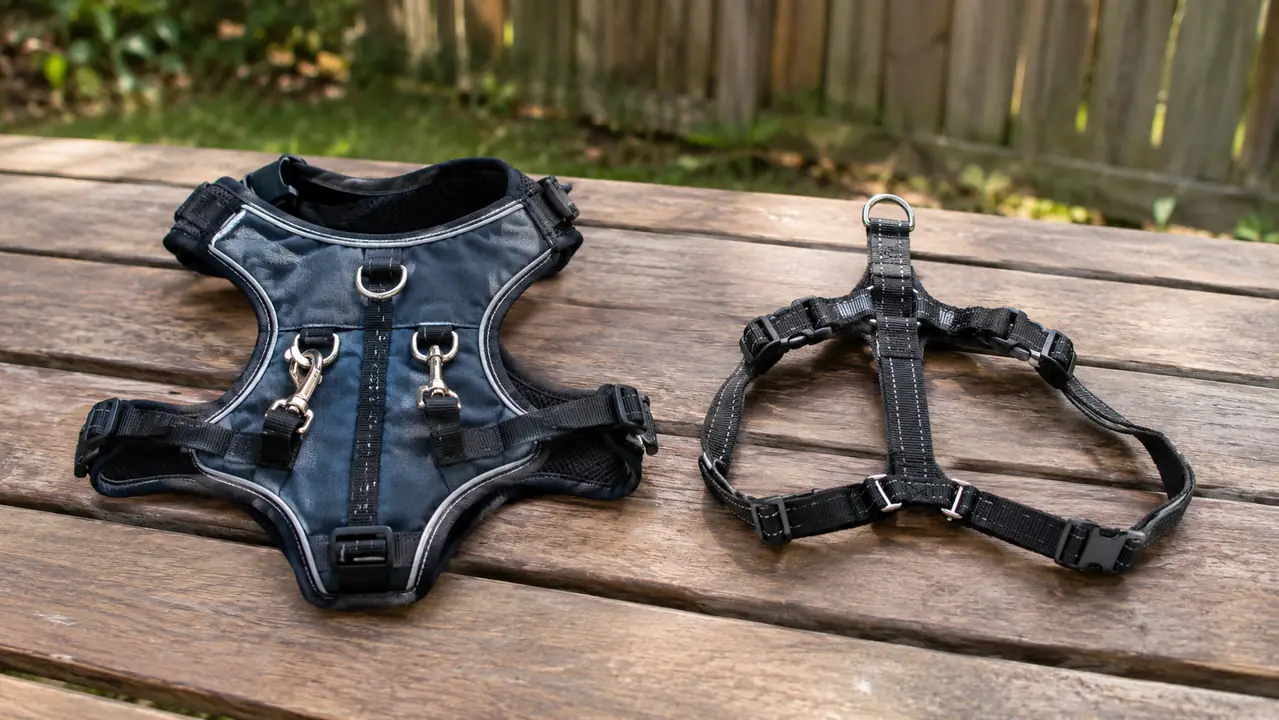
Who Should Buy Which
Buy the rabbitgoo if you walk a dog that pulls on a daily basis and you want a harness that can do everything. You get the front clip for training and the back clip for relaxed walks, you get padding that does not chafe on a long outing, and you get a fit that adjusts across a wide range of sizes. That is the combination that fits how most people actually walk a dog, which is every day, in all kinds of weather, without wanting to swap gear around. It is the harness I kept on the hook, the one I grab first, and the one I would replace without thinking twice. If I had to buy it again tomorrow for Tucker, I would buy the same size and the same model and not shop around.
Buy the Easy Walk if your dog only pulls in short, explosive bursts, and you want the fastest possible correction. The martingale cinch gives the firmest steering of anything I tested, and the lighter build is welcome in summer heat. Just know that you are trading padding and a second clip for that steering. On a dog like Daisy, the webbing will leave marks on a long walk, and you will want a back-clip option for the calm days. It is a specialist tool, and it is very good at the one thing it does.
A Note on Sizing and Fit
Both harnesses come with sizing charts, and I want to say this plainly: measure your dog before you order. I have seen neighbors guess at a size and end up with a harness that slips over the head or digs into the belly, and then they blame the harness. For Tucker, who is 70 pounds and deep-chested, the medium rabbitgoo fit with room to adjust. For Daisy, 25 pounds, the same medium tightened down fine, but I would have been just as happy sizing her separately if I had not had the adjustment range.
The fit check is simple. You should be able to slide two fingers flat under the straps at the chest and behind the front legs. Tighter than that and it will chafe on a long walk. Looser than that and a puller like Tucker will work his way out of it. I checked both harnesses every week, because a strap that slips a quarter inch at a time will eventually be too loose to do its job, and that is true of every harness on the market, not just these two. When I first got the rabbitgoo, I set the fit loose the way I did with collars, and Tucker slipped a shoulder out of it on the third walk. Tightened it down, checked the two-finger rule, and never had the problem again.
The Bottom Line
Six months, two dogs, and a notebook full of walk times and pulling counts. The rabbitgoo won my everyday slot because it does more things well: two clips, real padding, and an adjustment range that covers both my dogs. The Easy Walk won the one contest it entered, which is steering a hard puller with the least effort. If I could only keep one harness in the house, it is the rabbitgoo. If I only had one problem, a dog that lunges, I would keep the Easy Walk. That is the honest answer after six months of daily use, and it is the answer I would give a neighbor, my brother, or anyone who asked me at the dog park.
Whichever you pick, measure your dog first and check the fit twice a week. Both harnesses have sizing charts, and the fit is what makes the difference between a harness that works and a harness that sits in a drawer. For us, the rabbitgoo is the one that gets used every day, and that is the highest praise I can give any piece of gear.
Still Deciding? Start With the One That Does More
The rabbitgoo No Pull Harness has been on daily walks with my two dogs for six months, through heat, washing, and a 70 pound puller. If you want two leash clips, padded panels, and a fit that adjusts across sizes, check today's price on Amazon.
Amazon Check Today's Price on Amazon →