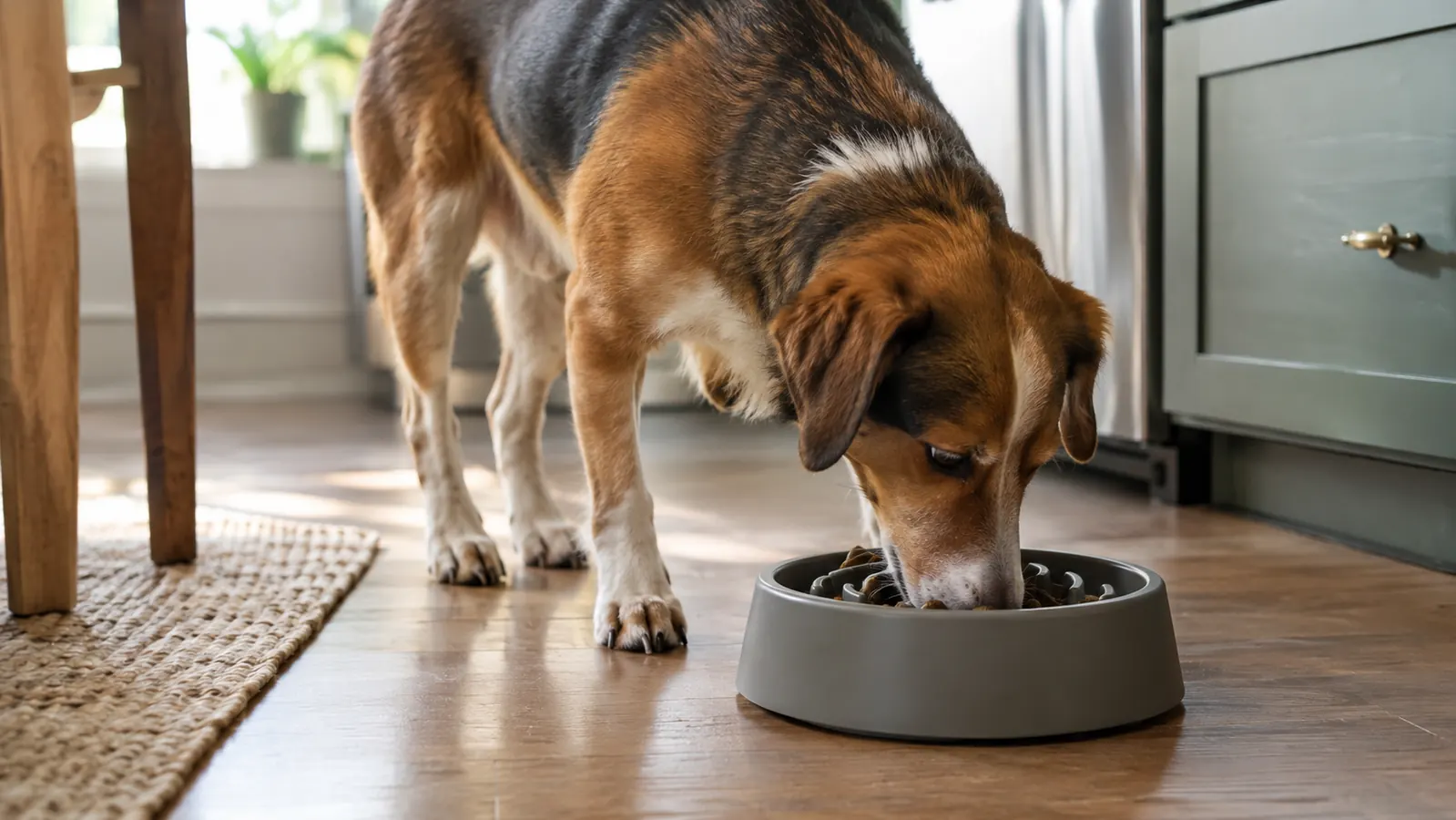
Daisy can put food away faster than any dog I have owned, and I have owned a few. The morning it really got my attention was a Tuesday in March. I filled her bowl, turned to pour my coffee, and by the time I looked back she was already licking the bottom, about thirty seconds after the kibble hit the bowl. Ten minutes later she threw it all up on the kitchen floor. That is not a feeding routine, that is a mess I am cleaning up twice a day, so I started looking for a way to slow her down. Tucker, my 70 pound shepherd mix, eats at a normal pace, so this was never about him. It was Daisy, the 25 pound terrier, who acted like every bowl was her last meal.
The fix I landed on is the Outward Hound Fun Feeder Slo Bowl. It is a bowl with a raised notch pattern on the inside that forces the dog to work around the ridges instead of gulping from an open surface. It is not fancy and it does not need batteries. It just changes the geometry of the meal. I have used one every day for a couple of months now on a 25 pound terrier mix that used to inhale dinner, and it works. It is not the only slow feeder on the market, and I tried a couple of others, but this one is the one that stuck. Here is how I set it up, step by step, including what I tried first that did not work, so you can skip the failed attempts.
Start With the Bowl That Changes the Meal
The Outward Hound Fun Feeder is the first thing I would try for a fast eater. It is simple, it cleans up in seconds, and it slowed Daisy down from her very first morning with it. If you have a dog that inhales dinner, this is the place to start.
Amazon Check Today's Price on Amazon →Step 1: Pick the Right Size Bowl for Your Dog
Before anything else, get the size right. The Outward Hound Fun Feeder comes in a few sizes, and the one I use is the Medium two cup model. That fits Daisy, my 25 pound terrier mix, well. Her whole meal fits in the bowl with room to spread out, and the ridges are spaced close enough that she has to slow down to reach the food. A 70 pound dog like Tucker needs a bigger bowl, because a small one fills up in one scoop and the dog can just Hoover the whole thing.
The size matters more than people think. If the bowl is too big for a small dog, the ridges sit far apart and the dog reaches around them without working. If it is too small for a big dog, you are refilling it mid meal, which defeats the purpose. Match the bowl to the dog's normal portion, not to the dog's body. You want the whole meal in the bowl at once, spread thin across the ridges, so the dog has to eat every ridge to finish.
What I tried before this: a plain flat bowl with a tennis ball dropped in the middle, which Daisy just nudged aside, and then a heavy ceramic bowl with a brick inside, which worked about as well as you would expect and scared her off her food for a day. The notch pattern is the part that actually does the work, because the food sits in the grooves and the dog has to eat around the raised sections. That is the whole trick, and the bowl gets it right.
Step 2: Measure the Portion and Spread It Into the Ridges
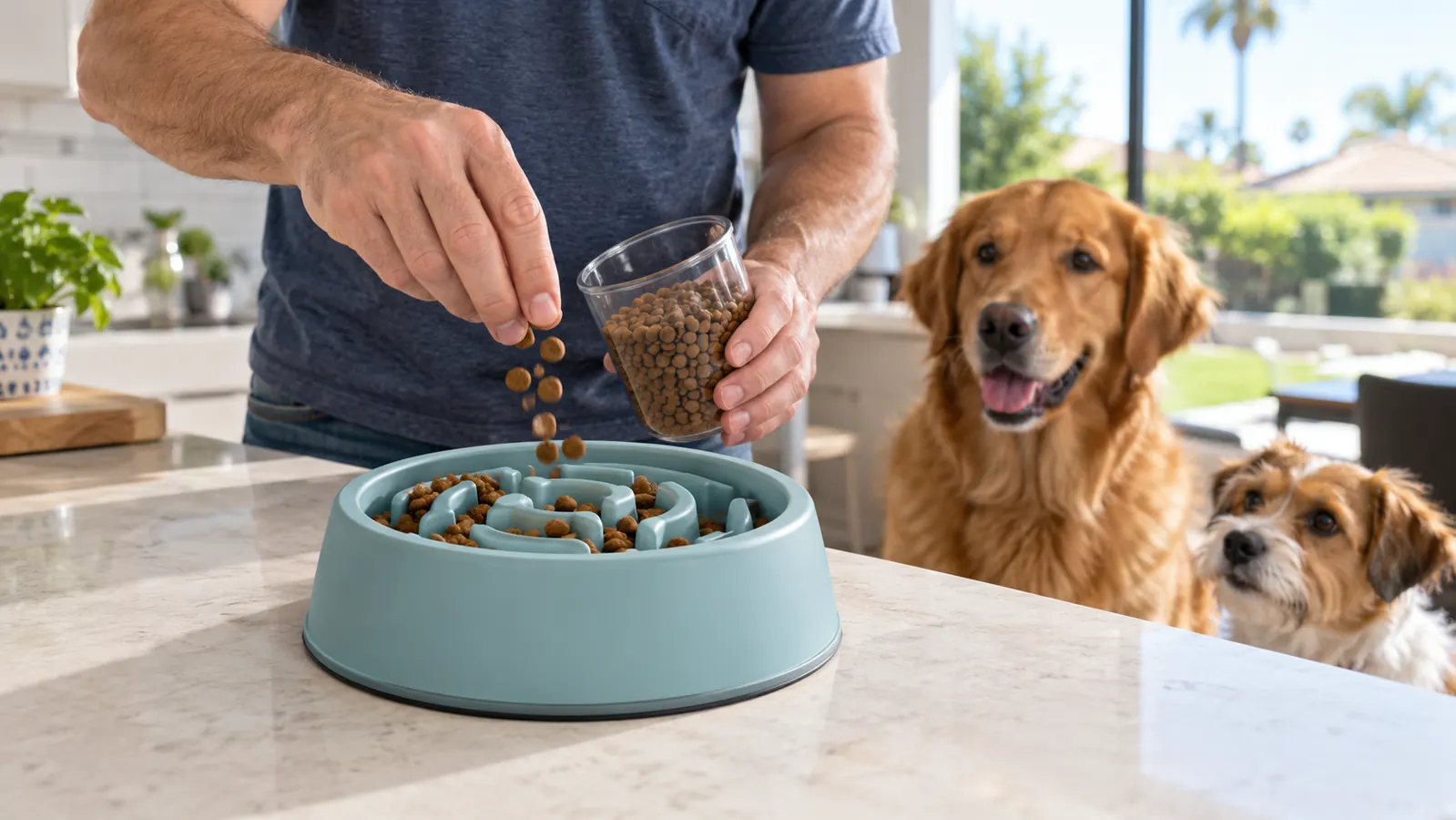
Once you have the right bowl, how you load it matters as much as the bowl itself. Measure the food first, the same portion you would normally give, then sprinkle it across the bowl so it settles into the grooves. Do not pour it in a pile in the middle. A pile lets the dog swallow from the top, and the whole point is to make her work for each mouthful. I keep the measuring scoop in the bag so I do not eyeball it, because eyeballing is how I ended up overfeeding her in the first place.
Daisy gets about a cup and a half at dinner, and that fills the Medium bowl nicely without overflowing. When I first switched, I made the mistake of dumping the food in one spot, and she just ate a tunnel straight down the middle and was done in about a minute. The morning I took the extra ten seconds to spread it evenly into the notches, she had to slow down because every mouthful meant tracing around a ridge to get to the next bite. She also started chewing her food instead of swallowing it whole, which was a first for her.
This is also where you adjust for how slow you want the meal to be. Want it slower? Use a smaller scoop and a second pass so the food sits deeper in the grooves. Want it faster? Flatten the food a little. I landed on one measured scoop spread evenly, and that gave Daisy a solid six minute meal without her getting frustrated and giving up on the bowl.
Step 3: Add a Little Warm Water or Wet Food
The next thing that helped was adding moisture. I started warming a few tablespoons of water and pouring it over the kibble so it soaked into the bottom of the grooves. The wet kibble sticks to the bowl a little, so Daisy has to lick and scrape instead of just inhaling. It also softens the food, which is gentler on an older dog like her. I am not making any medical claims here, just describing what I watched happen at the bowl. The warm water also keeps the kibble from bouncing out when I pour, which means less food on the floor and more in her mouth.
You do not want soup. A couple of tablespoons is enough to coat the food and soften the pieces that sit at the bottom. The first night I tried this, I poured in too much and made a sludge that Daisy licked out of the bowl in about two minutes, which was the opposite of what I wanted. Once I cut the water back, the meal stretched out to a normal pace again.
If your dog is picky about plain kibble, a spoon of wet food mixed in does the same job and adds a little appeal. Daisy is picky about where she sleeps and what she eats, so the wet food made the new bowl feel like an improvement instead of a punishment. The bowl slowed her down, and the food kept her interested in finishing every ridge.
Step 4: Supervise the First Few Meals
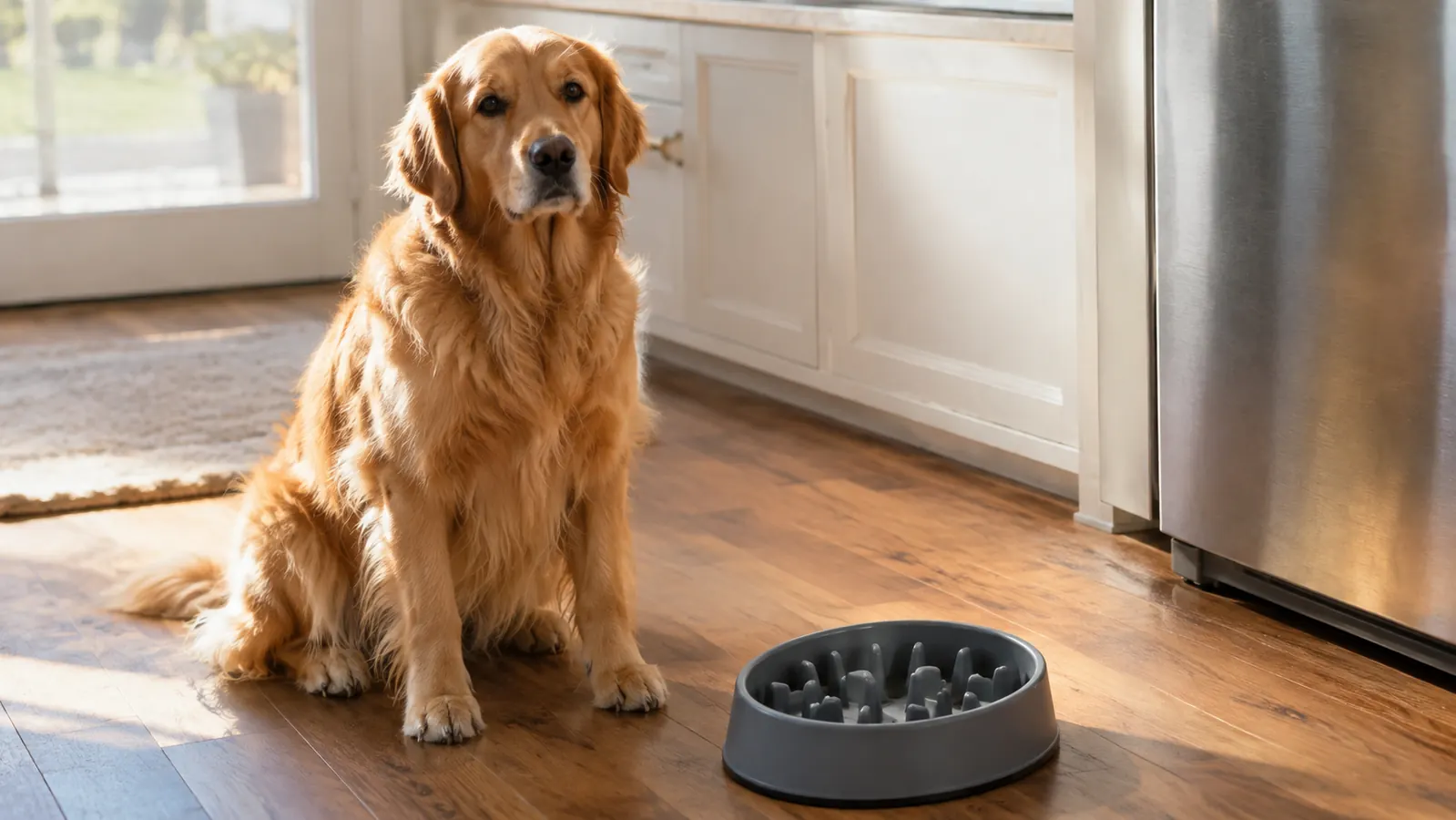
The first meal with any new feeder is going to be a little confused. Daisy spent the first two minutes nudging the bowl and looking at me like I had broken dinner. She had never had to work for food before, so the ridges confused her. I stayed in the kitchen and watched instead of walking off, because some dogs get frustrated and try to flip the bowl over. That first evening I did not leave the room once, and it was worth the extra minute.
That is where the non-slip base earns its keep. The bottom of the Outward Hound bowl has a grip that keeps it planted on the floor, so when Daisy shoved it around, it stayed put and she had to actually eat instead of chasing the bowl across the kitchen. On our tile floor that made the difference between a calm meal and a mess I would have to mop.
By the second meal she had it figured out, and by the third she was settling into a rhythm. The first morning she finished in about six minutes and then sat and licked the bottom for another minute, which I took as a good sign. By the end of the first week she was finishing every meal in about six minutes without me standing over her, and she stopped bolting for the door when she heard the scoop hit the bowl. Watch the first few meals closely, because the dog is learning a new habit, and the bowl cannot do the whole job by itself.
Step 5: Build It Into a Routine
The bowl only helps if you use it at every meal, so I made it part of the routine. Daisy eats at the same time every day, in the same corner of the kitchen, and Tucker eats in the other room. He is not a fast eater, but he will absolutely wander over and finish her bowl if she is still working on it, and that undoes all the good the slow feeder does.
Separating them was the detail that made the whole thing stick. The first week, Tucker stood over her while she worked, and she rushed to keep him from stealing it, which meant she was back to gulping. Once I closed the door between them, she stopped rushing, and her meal time stretched out to a normal pace. A slow feeder is only as good as the peace your dog gets to eat in.
After about three weeks of this, the habit stuck. I timed her on the first day with the bowl and she finished in under a minute. This morning she took six minutes and forty seconds, and she spent the last minute licking the grooves clean. Daisy still eats faster than I would like, and she is never going to be a dainty eater, but she has stopped throwing up on the kitchen floor. That is a change I can measure, and it did not take a trainer or a special food to get there.
What Else Helps
The slow feeder bowl does most of the work, but a few other things helped me round out the routine. Hand feeding the first few bites settles a really excited eater. Splitting dinner into two smaller meals, one at the usual time and one about an hour later, keeps the portion small enough that the dog is not starving by dinner. And a quiet spot away from the other dog, with no foot traffic, gives her room to eat at her own pace.
One more thing: clean the bowl after every meal. The grooves trap kibble dust and wet food, and a rinse in the sink takes ten seconds. A crusty bowl is the fastest way to get a picky eater to turn up her nose at dinner, and Daisy is plenty picky already. I keep a small brush by the sink and give the bowl a quick scrub when I do the dishes.
If you try a slow feeder for a couple of weeks and your dog is still gulping, or if you are worried about something more serious than speed, that is a conversation for your vet. I am not a vet, and I am not going to pretend this bowl fixes a medical problem. It fixes a behavior, and it fixes it well, but it is one tool in the routine, not a cure for everything.
Daisy went from emptying her bowl in under a minute to taking six or seven minutes, and she has stopped throwing up on the kitchen floor.
A Slow Feeder Is the Cheapest Fix I Found
If you have a dog that inhales dinner, the Outward Hound Fun Feeder is the first thing I would try. It is simple, it cleans up in seconds, and it changed our meal routine from a twice-daily mess into a calm few minutes at the bowl.
Amazon Check Today's Price on Amazon →