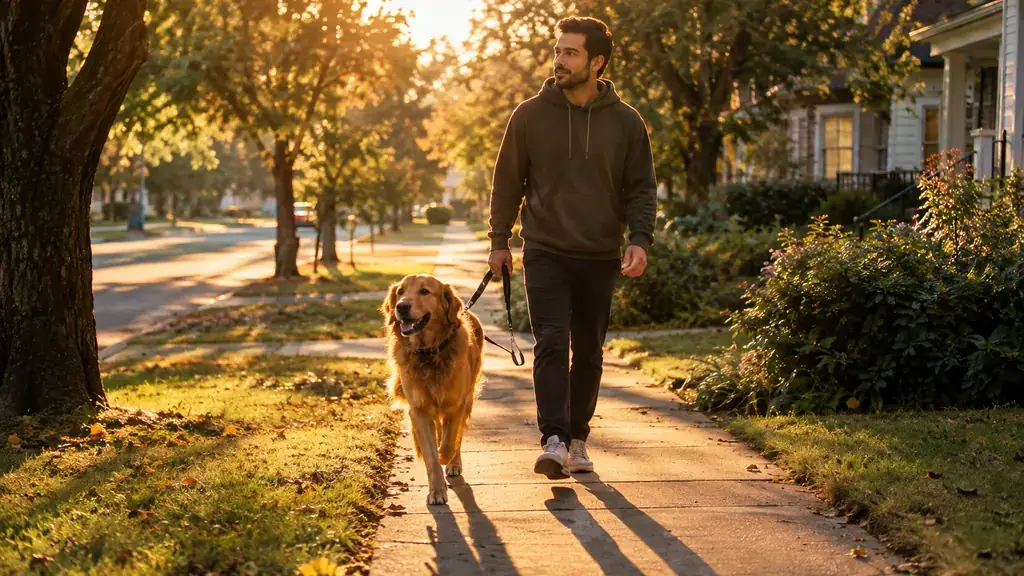
Tucker is 70 pounds of shepherd-type muscle with exactly one setting, and for the first month I had him, every walk started as a tug-of-war. He'd lunge for the door, I'd plant my feet, and we'd spend the next ten minutes arguing about who was actually leading who. My shoulder ached by the end of the block. My neighbor got a daily show from his front porch. And the thin nylon leash I'd grabbed at the checkout counter made everything worse, because it was too narrow to hold onto comfortably and too short to give either of us any room to move.
I've been walking dogs for a lot of years, and here's the thing nobody tells you when you bring home a big one: the leash matters just as much as the dog does. A strong dog needs a leash you can actually grip, a length you can work with, and webbing that doesn't saw into your hand the moment he spots a squirrel across the street. After trying a few, I settled on the Joytale reflective leash. A couple of months of daily walks later, Tucker and I finally move down the street like we're on the same team, and my shoulder doesn't ache anymore.
The grip that finally calmed my 70-pound puller
Tucker still has opinions, but I can hold the Joytale's one-inch webbing with one hand and keep walking. If your dog tests your grip every morning, check today's price.
Amazon Check Today's Price on Amazon →Step 1: Get a grip before you open the door
The first mistake most of us make is thinking the walk starts on the sidewalk. It starts in the house, at the moment you pick up the leash. A strong dog reads your grip before you ever open the door. If you look hesitant, if you fumble with the handle, he knows he's in charge and the rest of the walk is just a formality. So the whole system begins with how you hold the thing, and that's the first thing I changed.
The Joytale leash is one inch wide, which sounds like a small detail until you've held it next to a half-inch strap. That extra width spreads the pressure across your palm instead of digging a thin line into your skin. When Tucker hits the end of the line, my hand stays comfortable, which means I don't reflexively loosen my grip or drop the leash. Comfort is not a luxury on a walk. It's what lets you stay calm enough to be the leader instead of the person getting dragged.
Hold the handle loop in your dominant hand and let the rest of the length sit coiled in your other hand. Keep the loop around your wrist, but don't wrap it fully around your fingers. You want a firm hold you can release in an instant if he bolts, not a knot you can't undo. And practice the grip in the yard once or twice before you take it out in public. Muscle memory matters more than any piece of gear, because when the squirrel appears, your hand does what it practiced.
Step 2: Put the dog beside you, not in front
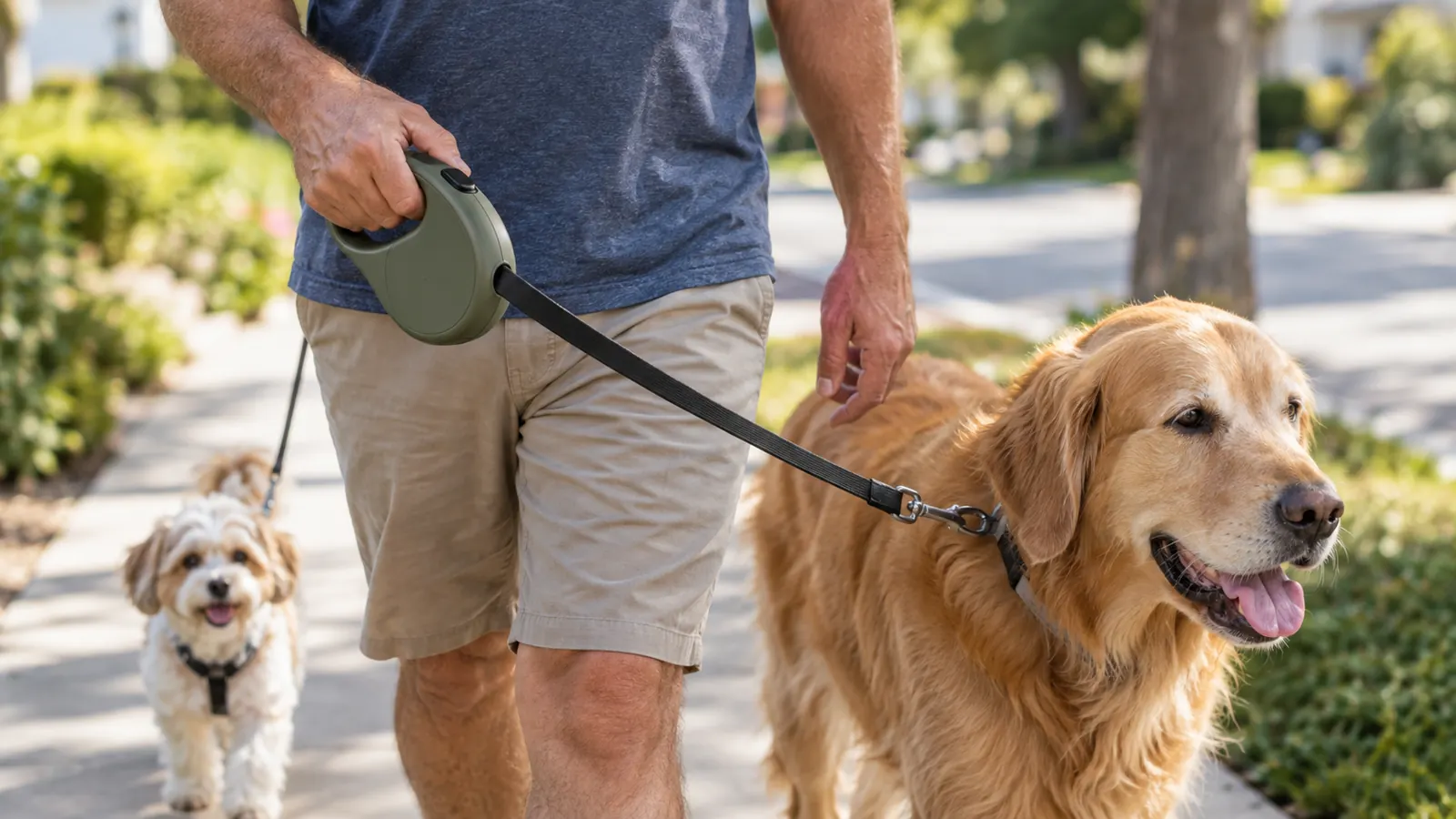
Position is everything with a puller. If the dog is two feet ahead of you, he's setting the pace and you're just the anchor at the end of the line. Get him beside your hip and keep him there, especially through doorways and past other dogs. Side-by-side is a partnership. Ahead of you is a sled team, and you're the sled. I started insisting on the side position before we even left the yard, and it made the whole walk easier.
The trick is to shorten the leash before the situation, not during it. When I see another walker coming, I gather the slack and bring Tucker in close. The six-foot length gives me the room to do that without a lot of wrestling, because I can reel him in a few feet at a time instead of yanking him all the way back. Shortening early means he never gets the chance to build up a head of steam, and it means the other walker doesn't have to wonder whether they're about to meet a lunging dog.
Don't pull back to get him to your side. Pulling back creates a tug, and a tug is a game he's happy to play all afternoon. Instead, stop walking and wait. When he turns to look at you, step forward. It takes patience for a week or two, but it's how he learns that staying close is what keeps the walk moving. The leash keeps him safe while the position teaches him manners, and after a while the position becomes habit.
Step 3: Use the six-foot length on purpose
The six feet on this leash are a tool, not a problem. On an open stretch of path, let the full length out and let Tucker sniff. That freedom early in the walk drains his curiosity so he's calmer for the rest of it. A dog who never gets to sniff spends the whole walk trying to get to everything at once. The sniffing is the reward for walking well, and the length is what lets me give it without letting him wander into the street.
On a narrow sidewalk or near a street, bring him back to a foot or two of leash and keep him tight to your side. The point is that you're choosing the length for the situation. When you're the one deciding how much slack he gets, you're the one in charge, and he can feel that. A dog who's told where to be and how much room he has is a calmer dog than one who's left to guess, and a calmer dog pulls less.
The other thing I like about the full length is that it lets me keep slack in the line. A taut leash actually encourages pulling, because the dog learns that tension is normal and constant. Letting the line go loose between the two of you resets that expectation and gives him a reason to check in with you. I keep the line slack most of the time now, and the difference in Tucker's behavior is obvious. He walks loose, I walk loose, and nobody's shoulder hurts at the end.
Step 4: Break the pull before it starts
Most people try to stop a pull by pulling harder. That's a contest you're going to lose with a 70-pound dog who has better leverage and no self-respect on the line. The move that works is to stop moving the moment the line tightens. You become a tree. Nothing happens, no forward motion, no reward, until the pressure comes off. It feels silly the first few times, standing still in the middle of the sidewalk, but it works, and it works fast.
The instant Tucker starts to haul, I stop. I stand still, hold the leash firm, and wait for him to look back at me. The second the line goes slack, I praise him and we move again. He's learned that pulling never gets him where he wants to go, and that turning to check in does. It's simple, but it works, and it works faster than any yelling ever did. The quiet version of training always beats the loud version.
This is where the grip from Step 1 earns its keep. Holding a comfortable leash for the ten seconds of a full stop is easy. Holding a thin strap that's cutting into your hand makes you want to give up and let the dog win. I've lost plenty of training battles because my hands hurt and I gave in. Switching to a leash I can actually hold for a whole walk changed that, because I stopped being in pain and started being consistent, and consistency is the whole game.
Step 5: Make yourself seen when the sun is gone
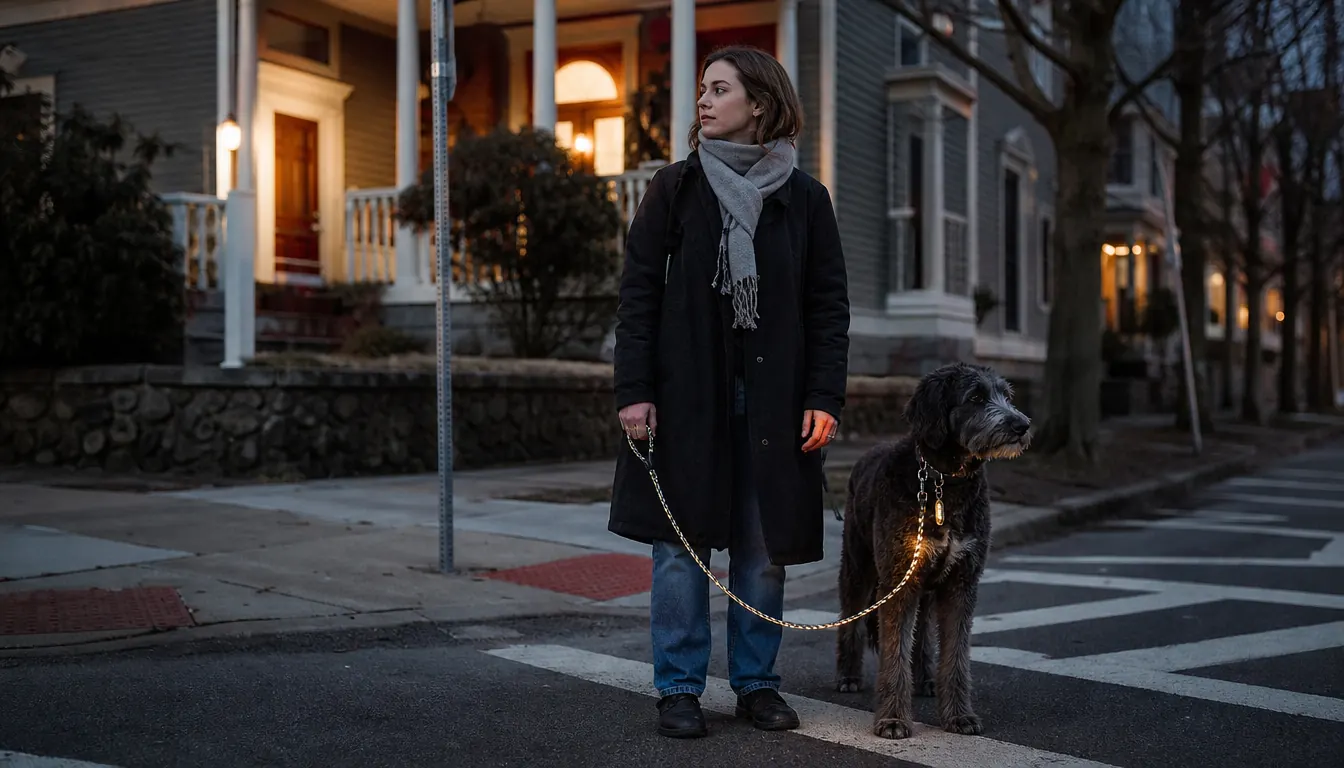
In Bakersfield, the summers are so hot that the only sensible walking hours are early morning and after dinner, which means a lot of our walks happen in low light. That's when the reflective material on the Joytale earns its place. Reflective webbing isn't something you notice during the day. It's something you're grateful for at six in the morning when the streetlights are still on and the roads are filling with people heading to work.
The reflective weave lights up when headlights hit it, which makes both of us visible to drivers well before they'd see a plain dark leash. It's not a substitute for a light on your dog or a headlamp for you, but it's one more layer between a walk and a close call, and it costs nothing extra in the way the leash handles. It behaves exactly like a normal leash in daylight, which is all I ask of any piece of gear.
Walk facing traffic on roads without sidewalks, keep your dog on the side away from the street, and treat every driveway as a spot where a car might back out. The leash makes you visible, but your habits are what keep you safe. Use both and you can walk at any hour you like, even in the heat of a Bakersfield summer, and you'll come home the same way you left.
The First Week Is the Hardest
The honest version of this story is that none of it happened overnight. The first week with the Joytale, Tucker still pulled, still lunged at the neighbor's cat, still tried to set the pace. What changed was that I could hold my ground without my hand going numb. That's the quiet difference a good leash makes. It doesn't train your dog. It trains you, by taking away the excuse of a bad tool.
By the second week, the stopping and waiting started to sink in. By the third week, he was checking in with me on his own at street corners. By the end of the first month, we were walking the same route in less time and with none of the drama. The leash didn't do the work. It just stopped being a reason to give up on the work.
I should mention that this leash is Tucker's. Daisy, our nine-year-old terrier, is on a lighter one, because a one-inch strap on a 25-pound dog is overkill. Match the gear to the dog. The Joytale is built for the big puller, and that's exactly the job it's doing here.
What Else Helps
A leash fixes your grip. It doesn't fix your dog's training, so pair it with the right tools. For a dog who lunges at other dogs, a front-clip harness worn under this leash takes the strain off your arm and gives you better steering than a collar alone. For a dog who needs a reason to focus, keep high-value treats in your pocket and reward him every time he looks back at you on his own. Little rewards build the habit faster than any correction.
Also give the walk a good start. Ten minutes of fetch in the backyard before you leash up takes the edge off a strong dog and makes the first block a lot more cooperative. And keep the leash out of reach when you're not using it. The Joytale has held up fine to a couple of months of daily use here, but no leash survives being chewed as a toy, no matter how well it's made.
Before every walk, I do a ten-second check: no frayed edges, the clip closes cleanly, the loop is intact. It's the difference between a good walk and a surprise on the far side of the neighborhood. Gear fails at the worst moment, so I'd rather find the problem in the yard than halfway around the block.
After two months of daily walks, Tucker still pulls on the first block. But I can hold the leash in one hand, keep my shoulder happy, and actually enjoy the walk.
Take back your walks with a leash you can actually hold
One inch of webbing, six feet of working length, and reflective stitching that shows up at dusk. If your strong dog is running the show, this is the easiest fix you'll make this year.
Amazon Check Today's Price on Amazon →