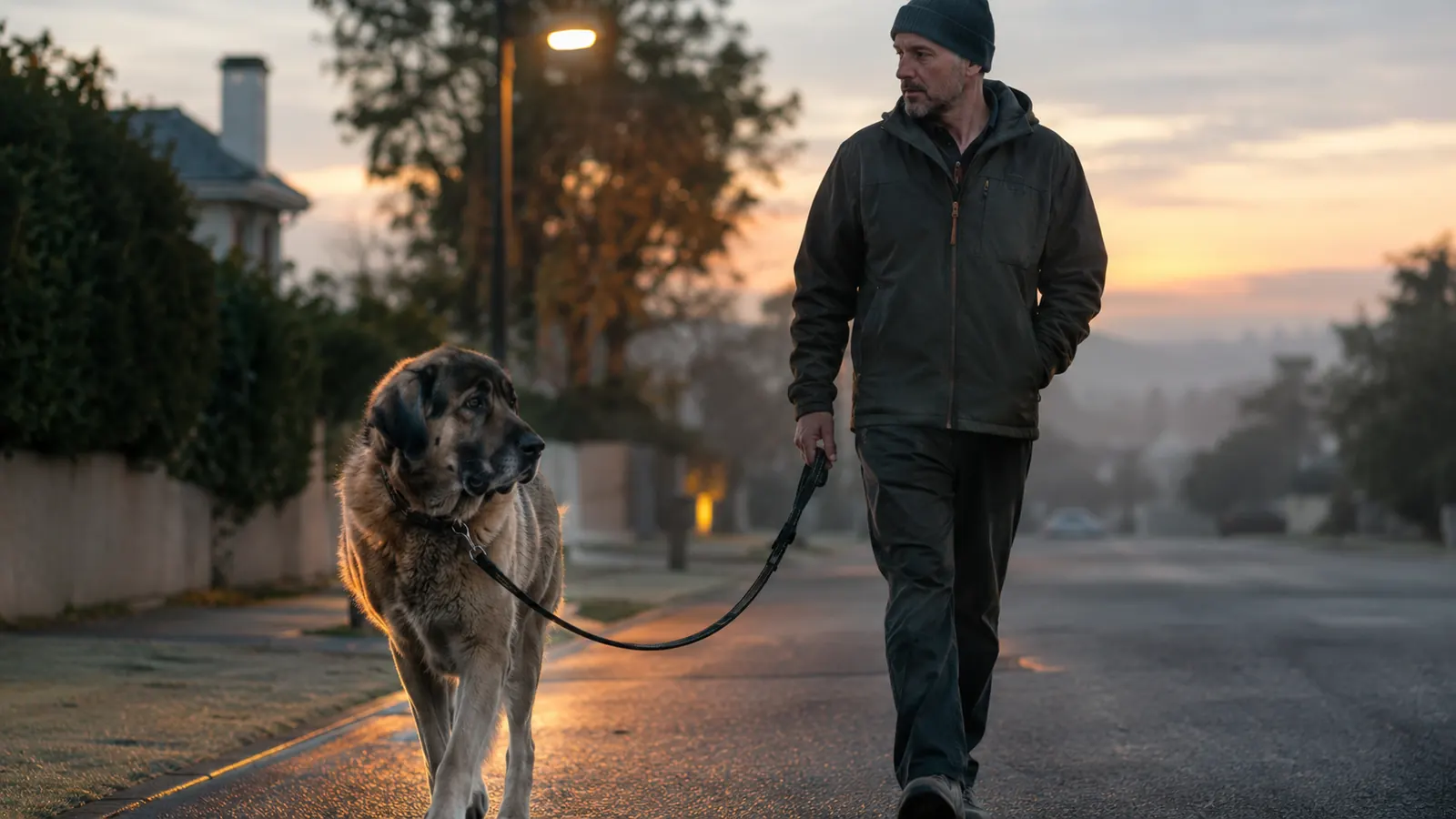
Here is what nobody tells you about the Joytale reflective leash: the reflective stitching is the last reason to buy it. That sounds like a strange thing to say about a product named for its glow, but eight months of dawn walks through Bakersfield taught me the reflectivity is a bonus, not the main event. The main event is that this leash survives a 70-pound puller day after day and never once made me feel like it was about to give out. That is a more valuable trait than any amount of shine.
My name is Ray Kessler. I walk two dogs, twice a day, every day, and I am the kind of person who tests gear the boring way: daily use, not a weekend in the park. Tucker is a six-year-old mixed shepherd, right around 70 pounds, and he pulls on the leash the way some people drive, like every moment spent waiting is a personal insult. Daisy is a nine-year-old terrier mix, about a quarter of his size, and her idea of a walk is a slow tour of every bush on the block. One leash has to serve both of them, and that is a much harder job than most people realize.
The Quick Verdict
A sturdy, comfortable leash that earns its keep on a hard-pulling dog, with honest limits: the reflective stitching fades before the nylon does, and no leash on earth fixes a pulling habit on its own.
Amazon Check Today's Price →The Leash That Took Eight Months of Morning Pulls
If you walk a strong dog before daylight, this is the leash I would hand you first. It held up to my puller for eight straight months, rain and heat included. See today's price on Amazon.
Amazon Check Today's Price on Amazon →How I've Used It
I bought this leash in late winter, mostly because the old one had started to fray where the clip meets the nylon, and I did not want to find out how much worse that could get on a 70-pound dog. Since then it has been on roughly 450 walks. Some of those were before sunrise, when the streetlights are still on and the reflective stitching is the whole point. Some were in the hundred-degree Bakersfield afternoons, when the only thing that matters is that the handle does not burn my hand and the nylon does not turn into a rope of sweat.
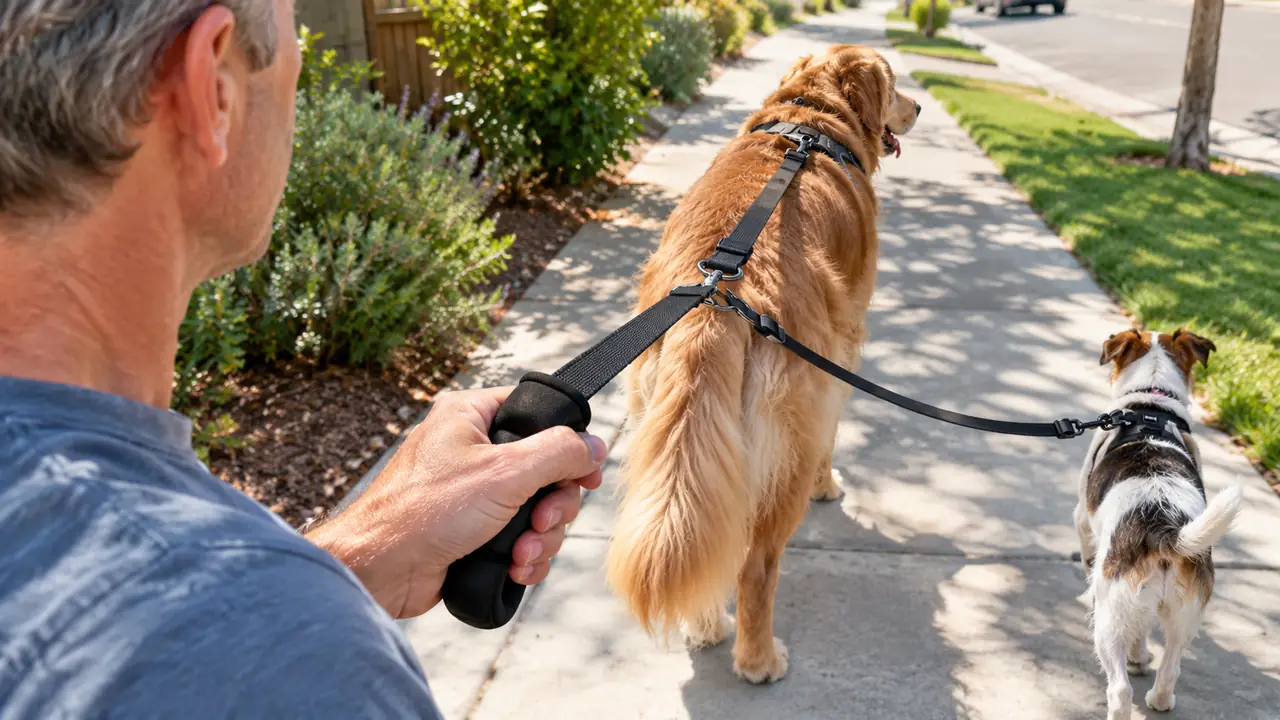
The daily routine is simple. I clip Tucker on the metal ring, check the traffic handle near the clip, and we go. When I walk Daisy, I shorten my grip to that same traffic handle and let her set the pace. The leash has never once been the weak point in the routine. The dogs are. The heat is. My own forgetfulness is. But the leash just does its job, walk after walk, and I stopped thinking about it somewhere around the second month, which is the highest compliment a piece of gear can get.
I should also say what I did not do. I did not hang it in a closet and bring it out for company. I did not treat it like a showpiece. I left it coiled on the floor mat of my pickup, in the back seat where the dogs ride, for weeks at a time, in heat that would soften a lesser piece of plastic. If a leash is going to fail you, that is where you find out, and this one never did.
The truck matters more than it sounds like. That floor mat is hot, dusty, and covered in dog hair and the occasional muddy paw. I have killed cheaper leashes in that truck in a month. This one has been there since February, and the only part that looks older is the reflective stitching, which brings me to the part everyone skips. Everything else, the clip, the handle, the nylon, still looks like it came out of the package, and that is after a summer of real use, not a photo shoot.
What Nobody Tells You About the Reflective Stitching
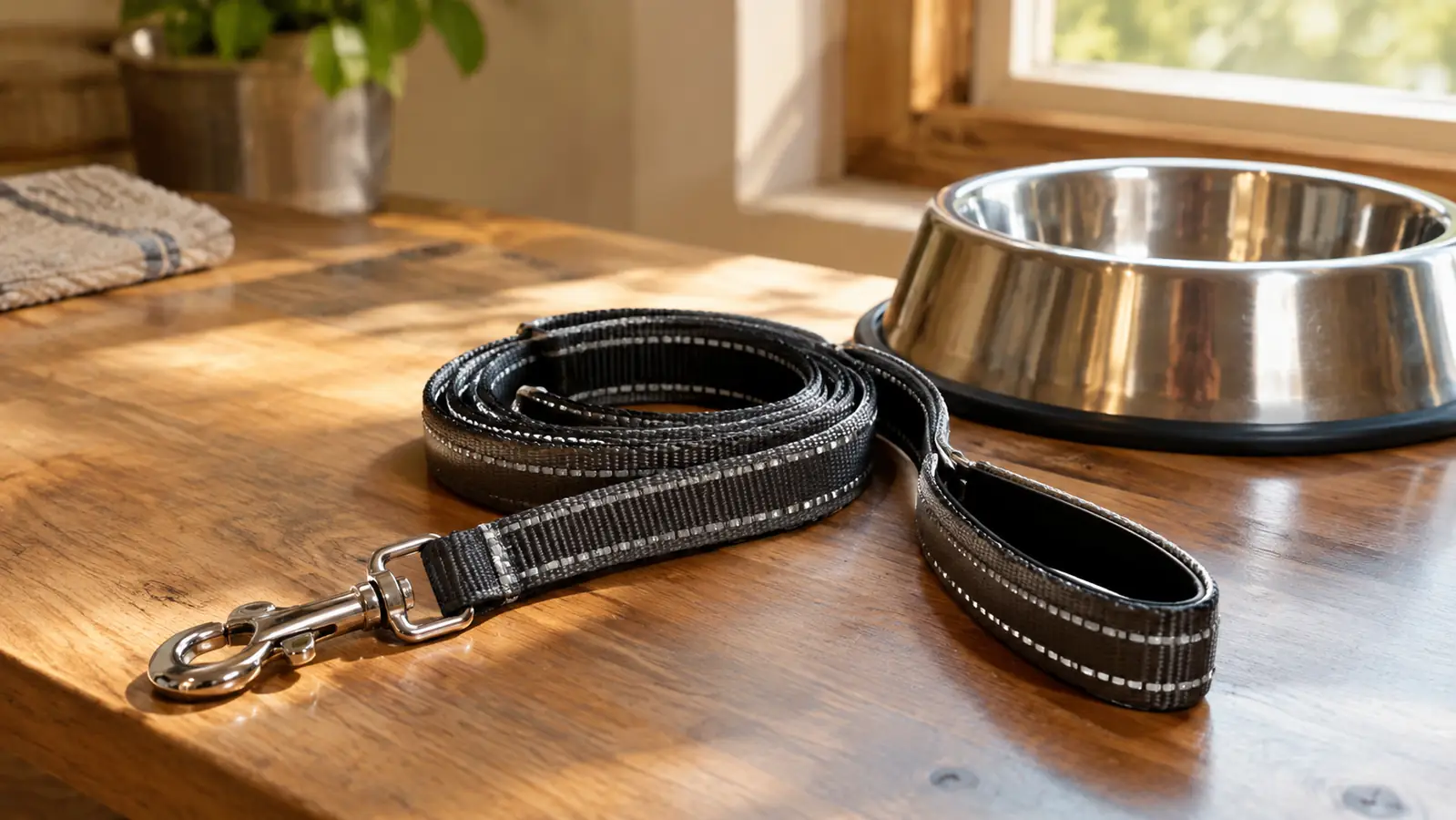
Let us start with the feature the box leads with, because this is the part most reviews skip. The reflective stitching on this Joytale leash is real, and it works, but it works on a narrow window. It lights up when a set of headlights hits it from the right angle. It does not glow on its own. It is not a light. If you are counting on drivers to see you from a distance, the stitching helps, but it is not a substitute for a headlamp on your jacket or a light clipped to your dog's collar.
The second thing nobody tells you is that the reflective thread dulls. After eight months of regular use, including a few gentle washes, the stitching is still visible, but it is not as bright as it was on day one. The nylon underneath looks nearly new. The reflective material is the first thing to go, which feels backwards for a product sold on that feature. I would not call it a deal breaker. I would call it the honest tradeoff of a leash at this price point, and the reason you should not buy this leash only for the glow.
If you walk in the dark every single night and your entire visibility plan is the stitching on this leash, plan better. Use it as one layer. Add a light. On a clear dark morning, with headlights coming around a bend, the stitching is visible from a good distance, and that has genuinely made me feel safer on the shoulder of the road. I just do not treat it as the whole safety plan. Keep the leash because it is a good leash, but understand that reflectivity is a help, not a guarantee. That is the difference between a review that tells you the truth and one that just repeats the marketing.
The Hardware Holds, But It Has a Personality
The metal clip has been the quiet surprise of this leash. It has been through morning dew, the occasional rain, and months of being dragged across pavement when Tucker stops to investigate something across the street. I expected rust by now. There is none. The spring still snaps clean, and the clip still swivels instead of binding when Tucker changes direction, which he does roughly every four seconds on a busy walk. That swivel matters more than people think, because a clip that binds turns a calm dog into a frustrated one.
But the clip is heavy. That is the tradeoff. A solid metal clip that survives hard pulling is a solid metal clip, and it swings when the leash goes slack. If your dog lunges at another dog and the leash goes tight, that swinging clip comes toward you fast. I learned to keep a hand on the traffic handle near the clip on crowded walks, which is also the position I want anyway when we cross a street.
The padded handle is a genuine comfort and also the part I have to warn people about. It is bulky. My hands are big from years of warehouse work, so it fits me fine. My wife finds it a little thick and has to grip it further down. If you have smaller hands, try one before you assume it will feel good to you, because the padding is the point of the handle, and a handle that does not fit your hand is just a handle.
The swivel at the clip is another detail worth naming. When Tucker changes direction, the clip turns with him instead of twisting the nylon into a spiral. A twisted leash is how you get a sore wrist and a dog that keeps stopping to shake. This one has not twisted on me once in eight months, which is more than I can say for the leash it replaced.
Wet Weather and the Weight That Comes With It
Bakersfield is dry most of the year, which means I did not learn this lesson the fast way. It took a few wet mornings to figure out that nylon soaks up water. A dry one-inch nylon Joytale leash is light in the hand. A wet one is a different animal. It gets heavier, it stiffens, and the reflective stitching, already the weakest link, gets harder to see when the surface is wet and the light is flat.
It dries out fine. That is the good news. After a rainy morning I hang it over the gate in the backyard and it is dry by afternoon. It does not rot, it does not smell, and it does not leave marks on my hands. But if you live somewhere it rains a lot, expect the leash to feel different in your grip on those days. That is not a defect. It is just what nylon does, and nobody tells you about it until you are standing in the rain holding a heavier leash than you started with.
The wider one-inch width is part of why I picked this leash for Tucker. It spreads the pressure of a hard pull across more of his chest, and it gives me a better grip when he decides to plant his feet and brace. That width is also the reason it feels heavier when wet. You cannot have the spread without the weight, and for my money, the spread is worth it.
What It Won't Do (and What Won't Fix It)
Here is the honest limit. This leash will not stop your dog from pulling. It will make the pulling safer and easier on your hands, and the traffic handle gives you a way to bring a lunging dog under control quickly, but the habit itself is a training problem. I spent years pretending a different leash would fix Tucker. It did not. What helped was consistency, daily walks on the same route, and a harness for the worst of it. This leash is the best tool I have used, not the whole solution.
It is also not chew-proof. Tucker has tested the handle, and the stitching there shows it. A dog that is determined to chew through a leash will chew through this one. It is built to survive pulling, dragging, and weather, not teeth. If your dog is a chewer, a metal leash or a cable leash is the honest answer, and I would rather tell you that now than have you find out the expensive way.
And one more thing I will be plain about: the 4.7 star rating with over 29,000 reviews on the Joytale listing is fair. This is a good leash, and the rating reflects that. But a good leash is a tool, and it is only as good as how you use it. The people who leave glowing reviews are usually the ones who understand what a leash can and cannot do, and the ones who leave angry reviews are usually asking it to do a job it was never built for.
There is also a routine element to using it well. I rinse it with the hose after muddy walks and let it dry before it goes back in the truck. That takes thirty seconds. I check the stitching at the clip monthly, because that is where any leash will fail first, and I have not found wear yet. The maintenance is almost nothing, but it is not zero, and the difference between a leash that lasts a year and one that lasts three is usually those thirty seconds.
What I Liked
- Wide 1-inch nylon spreads a hard pull across the chest and stays easy on the hands
- Reflective stitching shows up clearly under direct headlights on dark mornings
- Solid metal clip with no rust after eight months of daily use and weather
- Traffic handle near the clip gives quick control at curbs and in crowds
- Padded handle stays comfortable even when Tucker is at full pull
- Survived being left in the truck through Bakersfield summers without weakening
Where It Falls Short
- Reflective stitching fades and dulls long before the nylon itself wears out
- The metal clip is heavy and swings when the leash goes slack, a hazard near your face
- Nylon soaks up water and gets noticeably heavier and stiffer when wet
- The padded handle is bulky for smaller hands
- It manages pulling, it does not cure it, and that part is a training job
The reflective stitching is what sells this leash. It is also the first thing to go.
Who This Is For
If you have a medium or large dog that pulls, and you walk in the dark at least part of the year, this leash earns its place. The width, the padded handle, and the traffic handle all exist for exactly that situation. It is the leash I grab first for Tucker, and that is the highest praise I can give it after eight months of daily use. I do not think about the leash when I pick it up. I just pick it up. That is what a good tool feels like after the newness wears off.
It is also for people who are honest about what a leash can do. If you understand that reflectivity is one layer of visibility and not the whole plan, if you are willing to spend thirty seconds rinsing it after a muddy walk, if you want a tool that will not be the reason a walk goes sideways, this is that tool. The reflectivity does its part. The hardware does its part. The width does its part. And none of it requires me to think, which is exactly what I want at five in the morning. It is a boring product in the best way. It does what it says and does not pretend to be more than a leash.
Who Should Skip It
If your dog is small, the one-inch width is overkill, and the metal clip alone will outweigh your dog's contribution to the walk. Daisy wears this leash fine, but honestly, a lighter leash suits her better. I keep this one for Tucker and reach for a lighter option when it is her turn. If your dog is under thirty pounds, look at a thinner leash before you buy this one.
Skip it too if you need a hands-free leash, a retractable leash, or something you can drop and leave clipped to a post while your dog wanders. This is a classic six-foot leash with a traffic handle. It does one job and does it well. If your job description is different, this is the wrong tool, and no amount of good stitching fixes that. And if your dog chews through leashes, buy a cable leash instead and save yourself the frustration and the money.
Eight Months, Two Dogs, One Leash Still Going
If you walk a strong dog in the dark, this is the honest recommendation from a guy who tested it the boring way: daily walks, rain, and a puller that never let up. See today's price on Amazon.
Amazon Check Today's Price on Amazon →