
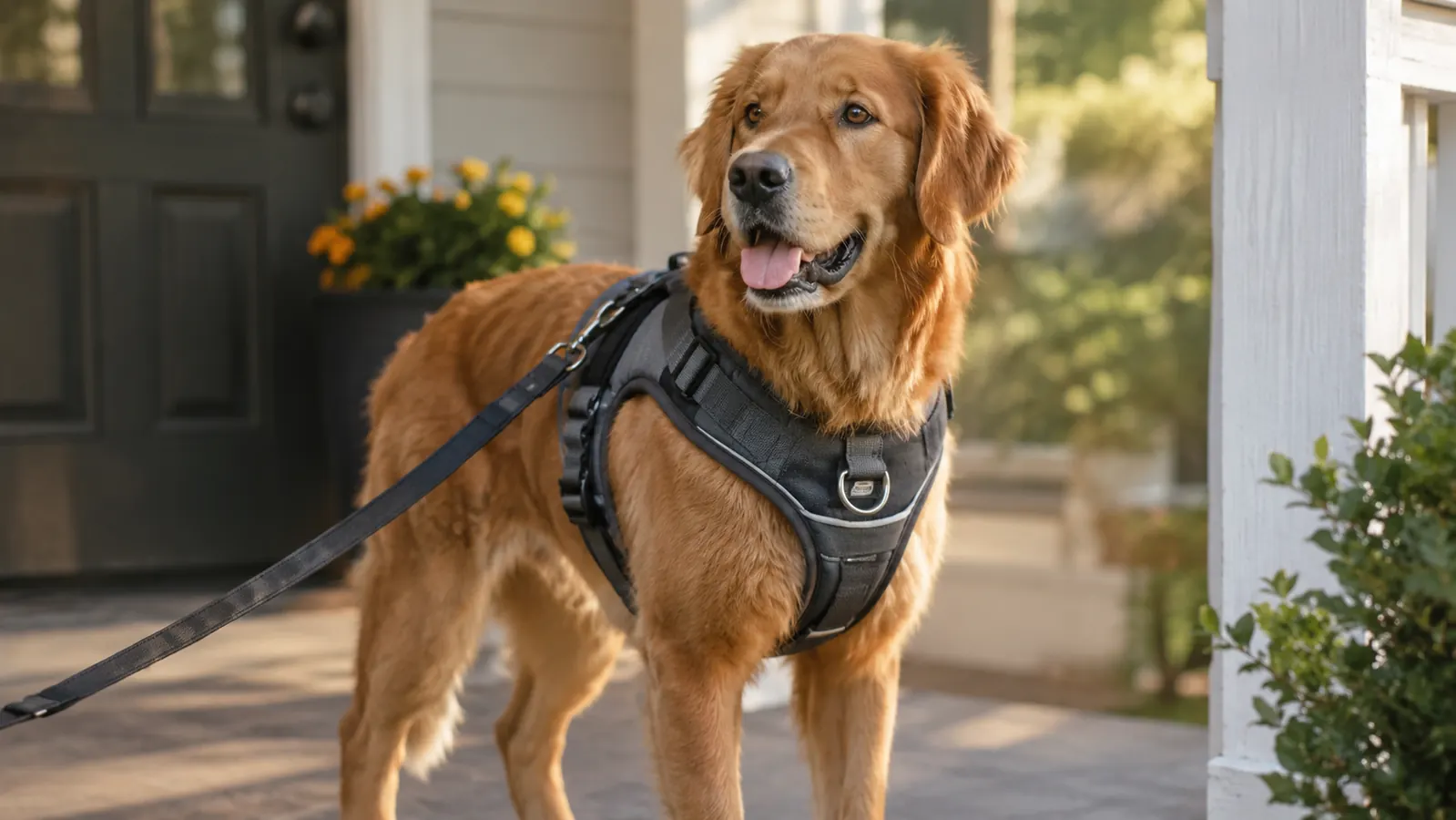
I have owned dogs long enough to be done with gear that looks great in the listing photo and falls apart in the first three weeks. Tucker is a 70 lb mixed-breed shepherd type who pulls on the leash like he is late for something, and Daisy is a 25 lb terrier mix who is nine years old and a little stiff in the mornings. I bought the rabbitgoo No Pull Harness in the medium size after two other harnesses let me down in the same year. One of them slipped off Tucker at the park. Another chafed his chest so badly that I had to switch to a collar for a week to let the skin heal. So when I say this harness has been on Tucker for six months of daily walks, you should know that is a longer run than anything else in the drawer has managed. This is not a review written from the product page. It is written from the end of a leash, on the same two-mile loop I have walked every morning for three years.
The Quick Verdict
A genuinely strong no-pull harness for a medium puller, with two real gripes: the sizing runs small and the front straps show wear sooner than I would like.
Amazon Check Today's Price →If your dog pulls on every walk, this is the harness I would buy again
Six months of daily use with a 70 lb puller and a 25 lb terrier that likes to chew straps. The rabbitgoo held up better than anything else I have tried. Check today's price on Amazon and decide for yourself.
Amazon Check Today's Price on Amazon →How I've Used It
I ordered the medium after measuring Tucker with a cloth tape. His chest girth at the widest point is about 34 inches, and the rabbitgoo sizing chart put that in the middle of the medium range. The harness arrived in a plain box with no instructions, which was the first hint that this is a buy-it-and-figure-it-out product. The two leash clips and the four adjustment points are self-explanatory once you have it in your hands, but the first time I tried to put it on a wiggling dog, I had to stop and look at the photos on the listing again.
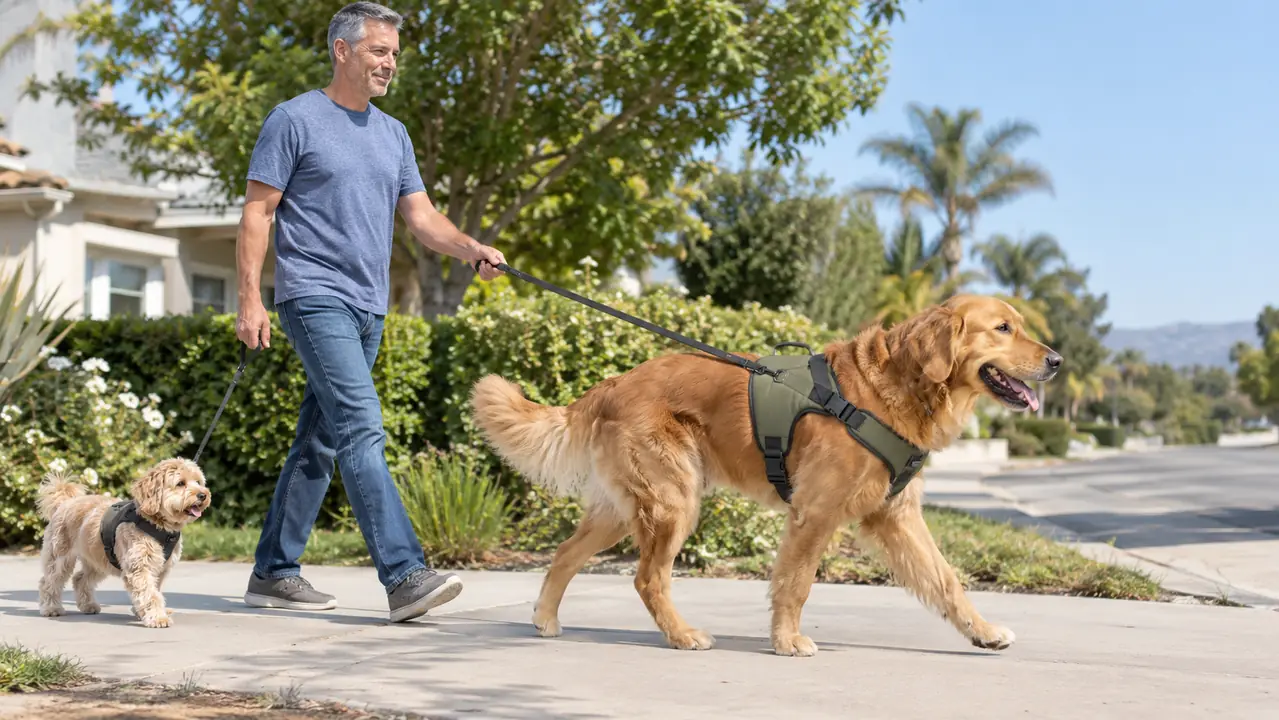
The routine has been the same for six months. Two walks a day, about 45 minutes each, one in the morning and one after dinner. We walk the same two-mile loop through a residential part of Bakersfield, past the school, around the park, and back along the canal. Summer here gets hot, and there were weeks where the afternoon temperature hit 104 degrees. On those days we walked early, before the pavement got too warm, and the harness went on Tucker and stayed on him for the whole walk. On cool mornings he wore it over a thin cotton shirt, which turned out to matter for the fit question I will get to in a minute.
The first week was the adjustment week. Tucker is not a dog that takes to new gear quietly. He walked stiff-legged for the first ten minutes of the first walk, kept stopping to look at his own chest, and tried once to back out of the whole thing when we passed the park. I stuck with it, mostly because the harness was already on and the alternative was carrying it home. By the end of week one he was walking normally. By week two I stopped noticing the harness was there at all, which is the highest compliment I can give any piece of dog gear.
Daisy does not wear this harness. She is nine, she is small, and she walks on a flat collar most days because she does not pull. But she is the reason I look at strap wear the way I do. Daisy chews. She has destroyed two leash handles and the buckle of an old harness she found in the garage. So when I say Tucker's rabbitgoo has survived daily use, part of what I mean is that it has survived a household where one dog chews anything left on the floor and the other one drags it around the yard.
The harness is easy to clean, which matters when you walk a dog that finds mud the way Tucker does. I hosed it off in the backyard twice, scrubbed the pad with dish soap and a brush, and let it dry in the sun. The straps came out clean, the padding did not hold the smell, and the stitching was unchanged after the wash. I have washed harnesses before that came out of the laundry with the padding lumpy and the buckles stiff. This one came out like new.
The Two Leash Clips: What Nobody Tells You
The headline feature is the two clips. One on the chest, one on the back. The idea is simple. Clip the leash to the front clip when you want steering and no pulling, clip it to the back clip for normal walking. In practice, the front clip is the one that does the real work, and here is the honest part. It does not stop a dog from pulling. It redirects. When Tucker lunges, the front clip turns his chest sideways, so he ends up walking in a small arc instead of dragging me down the street. The first time he did it, on the third day, he spotted a cat on the other side of the road and hit the end of the leash hard. The harness held, the clip held, and Tucker came around in a half circle with a look on his face like he had no idea how that happened.
What nobody tells you is that the front clip makes a little noise. The metal ring moves against the plastic when the dog changes direction, and you can hear a light click-click on a quiet street. It is not loud enough to be a problem, but if you are used to silent gear, it is noticeable for the first week. The other thing nobody tells you is that the front clip is the most likely point of failure on any harness, because it takes the most stress. I checked the stitching around the clip every Sunday for six months. Around month five, I could see the threads starting to flatten and fray at the very edge of the clip, not a failure, but a warning. I would not call this harness indestructible. I would call it honest about its limits.
The back clip is what I use for the second walk of the day, when Tucker has burned off most of his energy and walks at a normal pace. It is a simple D-ring, solidly sewn, and it has shown no wear at all. The two-clip setup is genuinely useful if you are willing to switch clips depending on the walk, because one harness does the job of two. That is the main reason this one stayed in the rotation.
The other thing the front clip does, and it took me two months to appreciate this, is it makes training easier without a second hand. When Tucker started to lunge at another dog on the far side of the street, I could hold the leash short and let the front clip do the turning work while I kept my other hand free. With a collar I would have needed two hands and a firmer correction. With this harness, the correction came from the geometry, not from me jerking the leash. That is the difference between a harness that helps you train and one that just holds a dog.
Strap Wear and the Long Haul
The plastic buckles are usually the first thing to go on a cheap harness, and I checked them with the same weekly routine as the front clip stitching. On this one, the buckle on the chest strap started to feel slightly loose around month four. It still clicks shut and it has not come undone during a walk, but it does not feel as crisp as it did on day one. If you buy this harness, plan to inspect that buckle once a month and be ready to replace the harness at around the one-year mark. That is not a complaint, it is a warning about what I would expect from any harness at this price point.
The fabric is softer than I expected. The chest and belly are padded, and the padding is what saved Tucker's skin. His chest was chafed raw by an earlier harness, a cheap H-style one with rough edges. The rabbitgoo pad sits over that same spot and he has had zero chafing in six months. The padding is also where the harness loses points. On the hottest days, the pad traps heat against his chest, and when I took the harness off after a 45 minute walk in the heat, the fabric under the pad was damp. Not soaked, but damp. In a cooler climate that would be a non-issue. In Bakersfield in August, it is a real thing to know about.
The reflective strips are the detail I did not expect to care about. We walk the two-mile loop in the dark for about three months of the year, and the strips on the chest and sides pick up car headlights well enough that I feel safer at the crosswalk by the school. I did not buy this harness for the reflectivity, but it has become one of the reasons I keep reaching for it. The straps themselves have not faded in the sun, which surprised me, because the yard gets direct light most of the day when the harness is hung out to dry.
There was one day that tested it harder than any walk. A neighbor's dog got loose and came charging across the street while we were out, and Tucker went from a relaxed walk to a full sprint in about two seconds. The front clip was on, and the harness held him through the pull, turned him, and did not slip or shift. He did not get loose, I did not get dragged, and the harness came through it with nothing more than the usual wear. That is the moment I stopped comparing this harness to the others in the drawer and started treating it as the one I reach for first.
Sizing, Fit, and the Chest Pad
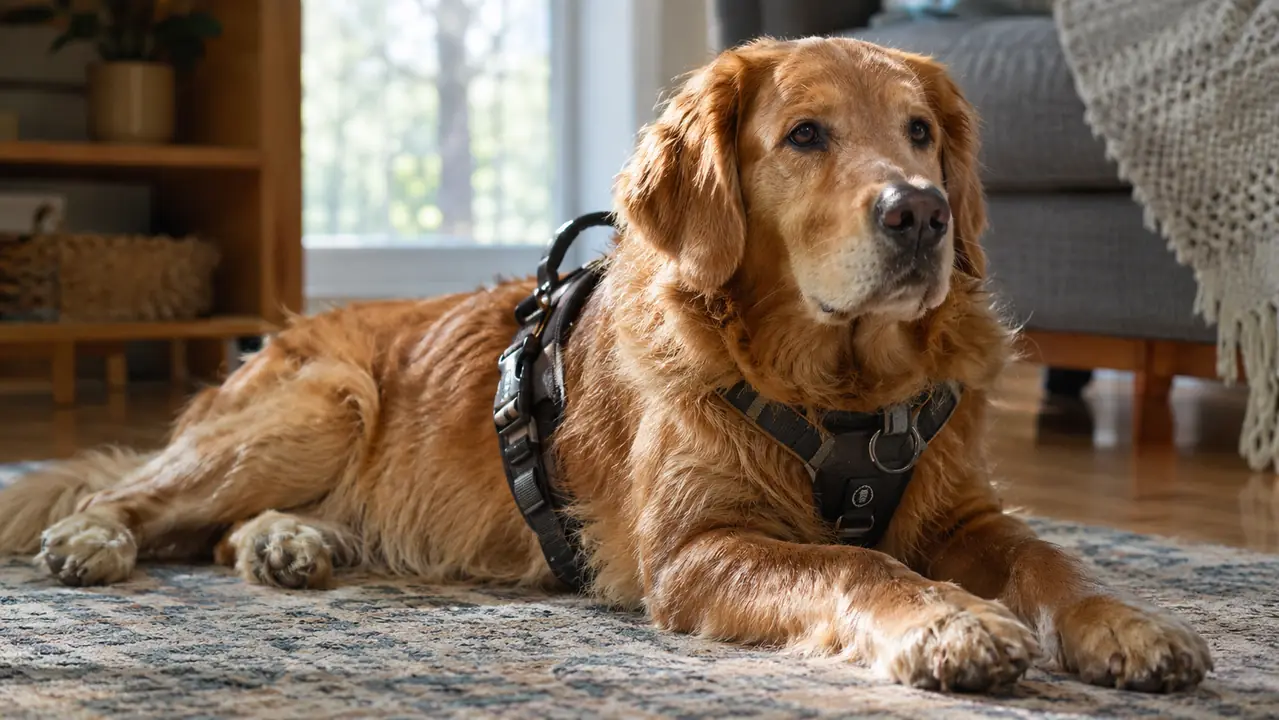
Here is the sizing truth that the listing does not tell you. The rabbitgoo runs small. Tucker is 70 lb with a 34 inch chest, and the medium fits him snugly. Snug enough that I double-checked the fit instructions on the listing, which say you should be able to fit two fingers between the strap and the dog. I can, but barely. If your dog is between sizes, size up. I would rather adjust a slightly large harness down than fight a slightly small one every morning.
The vest style covers a lot of the chest, which is good for a dog like Tucker who has slipped out of an H-style harness before. The belly strap sits behind the front legs and the two adjustment points let me get a fit that does not shift when he walks. But the coverage is also the tradeoff. On a dog with a thick coat, or a dog that runs warm, the vest style can feel like wearing a jacket indoors. Tucker is short-haired and it still gets warm under the pad in summer. I would not want to run a marathon with this thing on, and I would not want my dog to either. It is a walking harness, not a working harness.
One more fit detail that took me a month to figure out. When Tucker wears a thin cotton shirt on cool mornings, the harness fits tighter over the shirt, and the front clip sits a little higher on his chest. That changed the steering angle enough that I noticed it. It did not cause a problem, but if you walk your dog in any kind of coat, expect the harness to sit differently and adjust the straps on those days. The same is true after a long winter coat grows in, if your dog has one.
What I Liked
- Front and back leash clips give real options for training walks vs casual walks
- Padded chest and belly, zero chafing on sensitive skin after six months
- Reflective strips are genuinely visible on dark morning walks
- Two adjustment points make it easy to get a snug, no-shift fit
- Survived daily use with a strong puller and a household where a dog chews gear
Where It Falls Short
- Sizing runs small; size up if you are between sizes
- Chest pad traps heat on hot summer days
- Front clip stitching starts to show wear around month five
- Chest buckle loosened slightly after about four months
The front clip did not stop Tucker from pulling. It turned his pull into a turn, which is honestly more useful.
Who This Is For
This harness is for the owner of a medium to large dog that pulls on the leash and has already gone through a harness that slipped or chafed. It is for someone who walks the same route every day, wants a harness that stays put, and is willing to switch clips between the front and back depending on the walk. It is for a dog with a sensitive chest that needs padding, and for an owner who does not mind the extra coverage of a vest style. If your dog is in the 40 to 80 lb range, pulls hard enough to make walks a chore, and has skin that reacts to rough edges, this is a solid choice. The reflectivity is a bonus you will appreciate in the winter, and the two-clip setup gives you room to train without buying a second harness.
Who Should Skip It
Skip this harness if you have a very strong dog, over 90 lb, that pulls hard enough to drag you off your feet. The front clip redirects, but it does not restrain, and a big determined dog can still win the argument. Skip it if you live somewhere very hot and your dog runs warm, because the chest pad traps heat. Skip it if you want a minimal harness that disappears on the dog, because this one is a visible vest. And if your dog chews straps, plan to store this harness out of reach, because the straps are not chew-proof, they are just well-made. For a small dog under 20 lb, this is also more harness than you need, and a lighter design will be easier on both of you.
Six months in, I would buy it again
It is not perfect, the sizing runs small and the front stitching wears, but it is the best harness I have tried for a daily walking dog that pulls. Check today's price on Amazon and see if it fits your dog's needs.
Amazon Check Today's Price on Amazon →